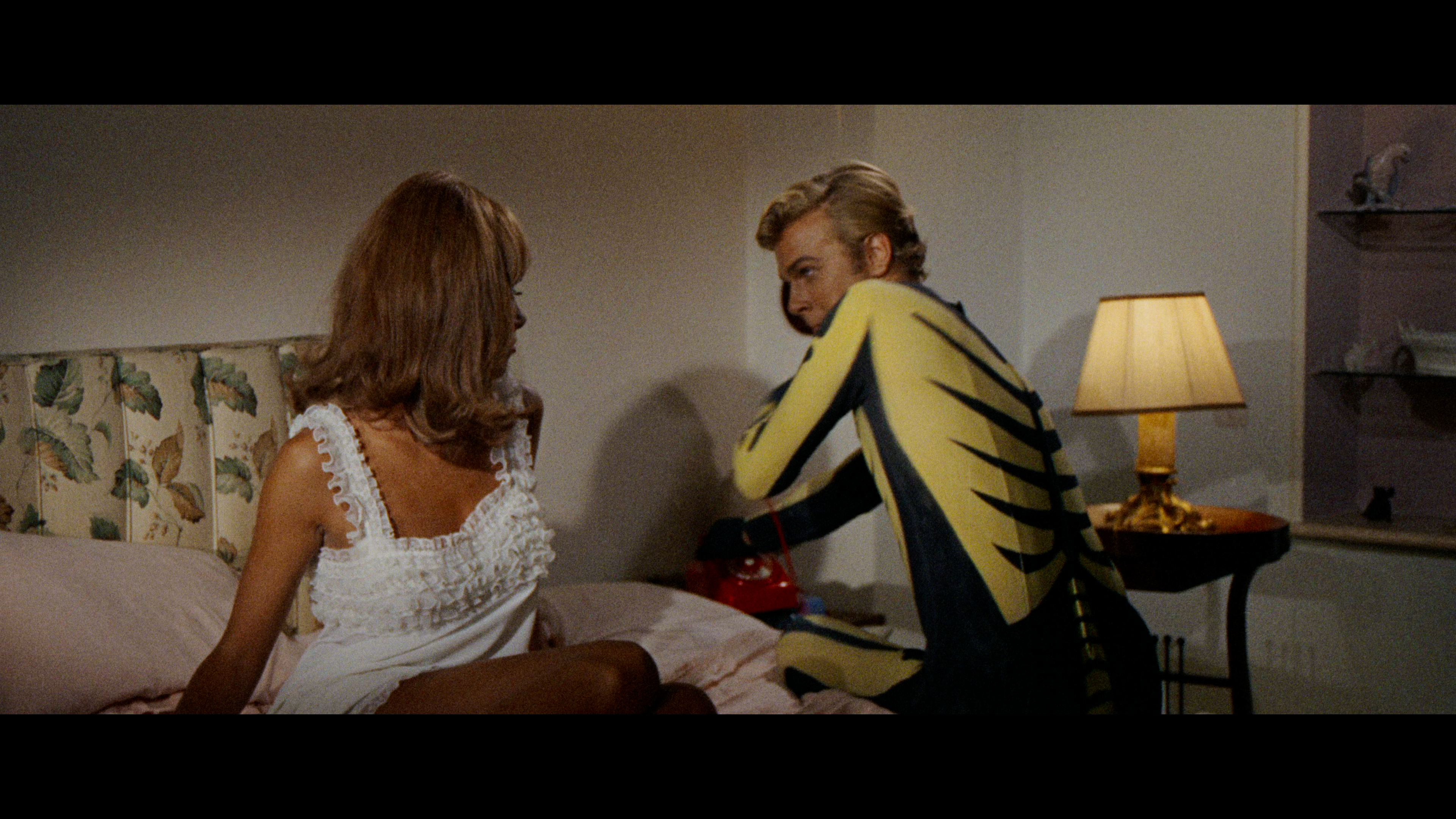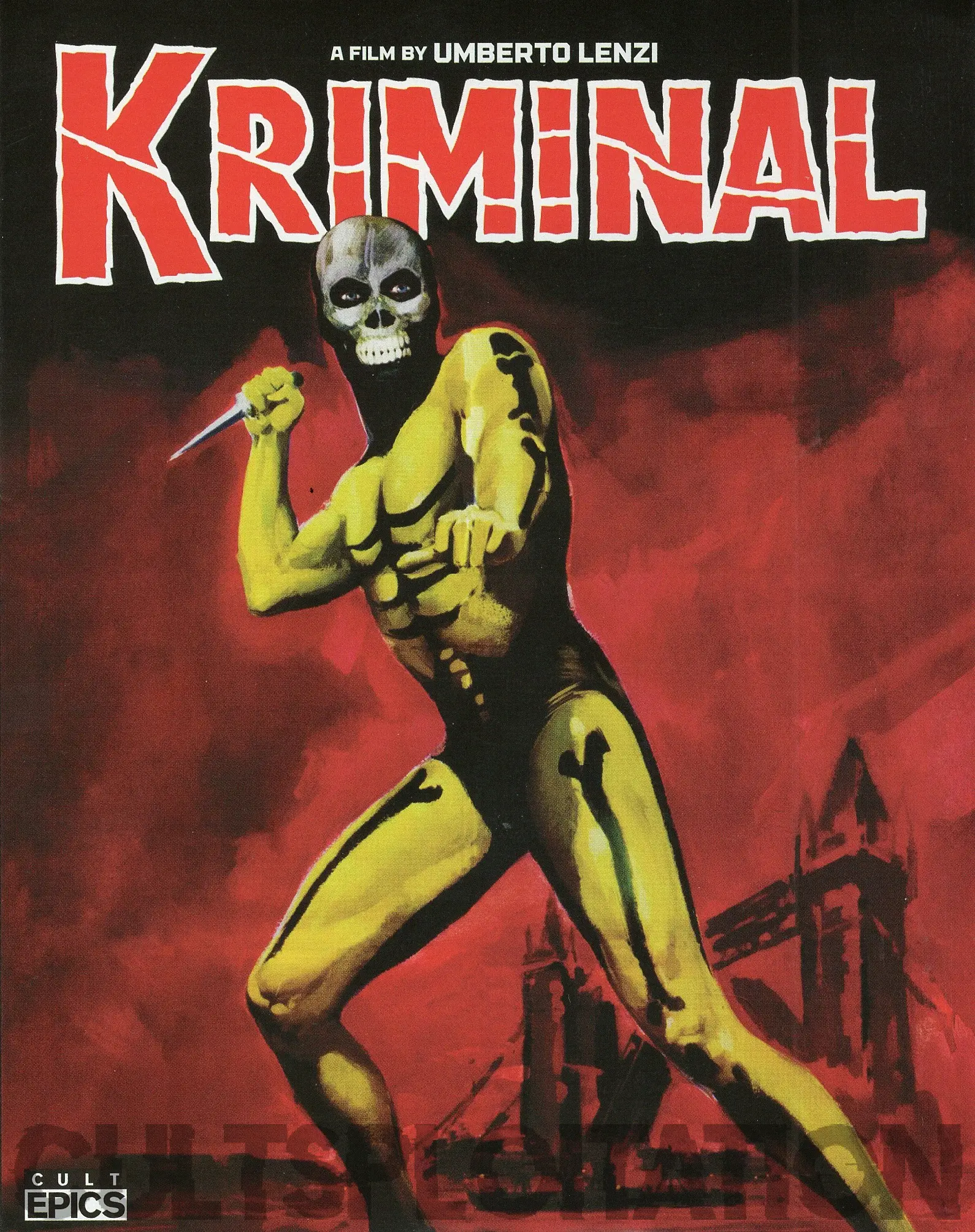

In the mid-1960s, director Umberto Lenzi was fairly embroiled in the Italian Eurocrime genre, directing a number of Bond-like capers (some, like 008: Operation Exterminate straight ripoffs), before his stint in the horror genre that has now become his main acclaim. 1966’s Kriminal found Lenzi co-writing and directing Glenn Saxson as the titular anti-hero, a suave playboy by day and skeleton bodysuit-wearing thief by night or whenever a disguise is needed. Slightly based on the comic series of the same name by Magnus and Max Bunker, the film attempts to depict the style of the Italian fumetti neri of the time (popularized by Diabolik and the more notable film adaptation Danger: Diabolik, which actually released after Kriminal in 1968). As a progenitor of the sub-genre, Kriminal is an important film – but it’s also not one of Lenzi’s best works.
The film follows Saxson’s character regularly, who escapes the gallows at the outset of the film thanks to the help of Inspector Milton (Andrea Bosic). Kriminal goes by a variety of names in the movie, all assumed pseudonyms, as he investigates the whereabouts of a clutch of diamonds that are being transported to Istanbul. In true jet-setting fashion, Kriminal jumps from Turkish locales to Spain as the thief becomes involved with two twins who have cooked up their own scheme to steal the diamonds away with a man named Alex (Ivano Staccioli). Throughout, he’s pursued by his antagonist Milton, who attempts to arrest Kriminal at every turn.
On the surface, Kriminal sounds like an engaging film. It has an involved plot that ingeniously uses twins in its initial scheme, as well as multiple double-crossings along the way. Kriminal as a character, too, is quite interesting; the film doesn’t give much insight into his overall motivations – and it doesn’t appear that Saxson’s character is all that needy for money with all the funds he already seems to have at his disposal – but it ultimately comes down to just his love of the game. Possibly all of the women he comes into contact with as well; that also seems like a net positive. That mysticism surrounding his character also means Kriminal is always at a distance from the audience, and his morality is constantly questioned as the viewer seems him murder a woman in cold blood in a sauna or cause the demise of one of his love interests. Kriminal makes for a good anti-hero, because it’s never clear how far he’s willing to go in his sport of pilfering.
With that said, because of its twists Kriminal is often forced into exposition to clarify its proceedings, and this often detracts from any forward momentum Lenzi has generated. Unfortunately, Kriminal doesn’t utilize its eye-catching skeleton suit enough – and it’s all the more apparent considering that one of the film’s most tantalizing and tense moments involves Saxson’s thief slipping slyly into a villa with his suit on and then jumping from the roof undetected. Its reliance on Saxson’s obviously handsome looks seems to ape spy capers and Bondian roguishness rather than leaning into a grittier tone, to the film’s detriment.
Had there been about 50% more sleuthing and stealing, Kriminal would be an excellently fun adventure. As it stands, Lenzi captures its beautiful European backdrops and overall crime caper storyline, but fails to capitalize on the more dynamic and, dare I say, interesting elements that could set Kriminal apart from other minor Eurocrime. With Danger: Diabolik releasing only two years later, Kriminal was doomed to be the lesser fumetti neri adaptation.
Kriminal 4K UHD Review
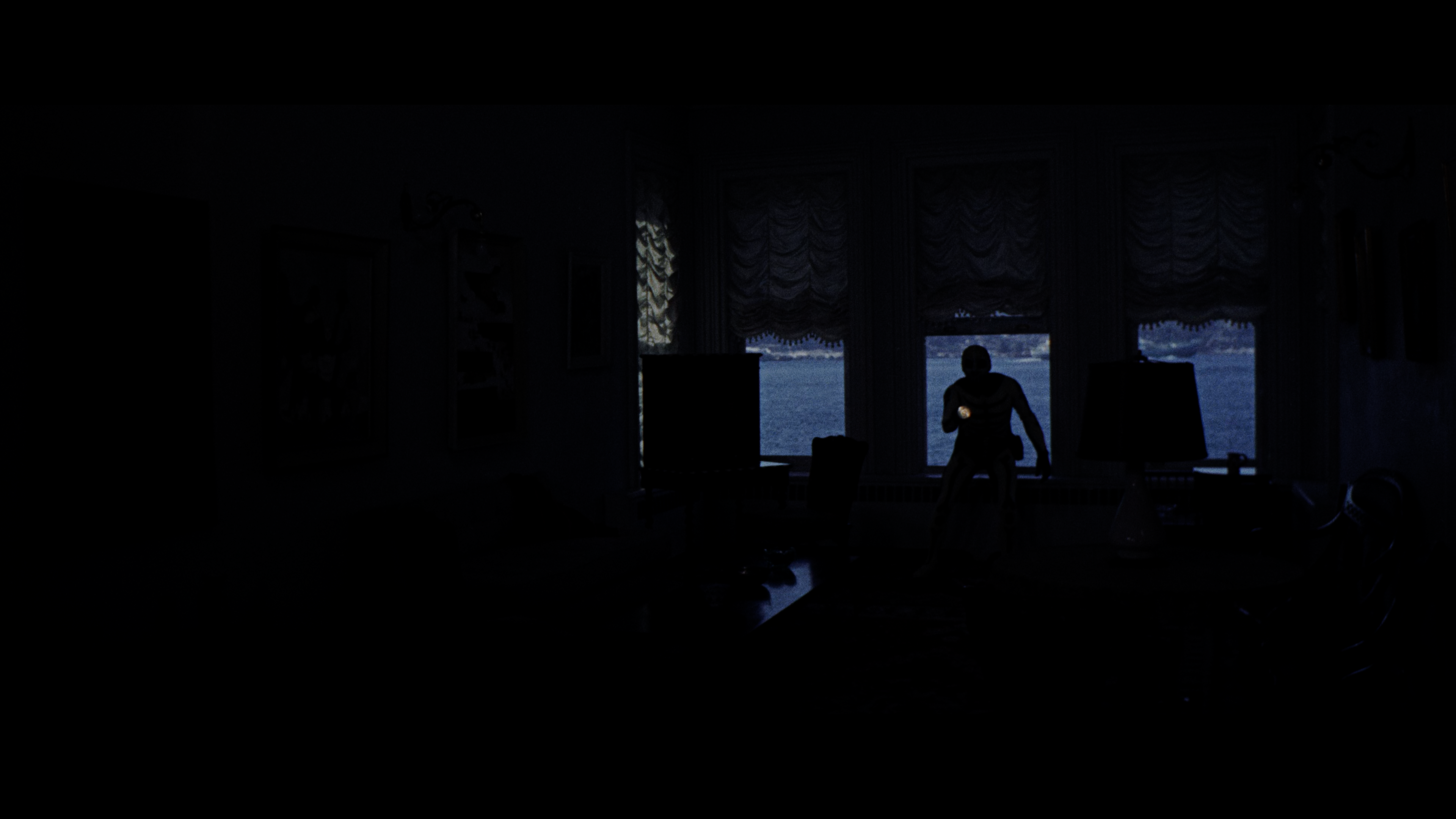
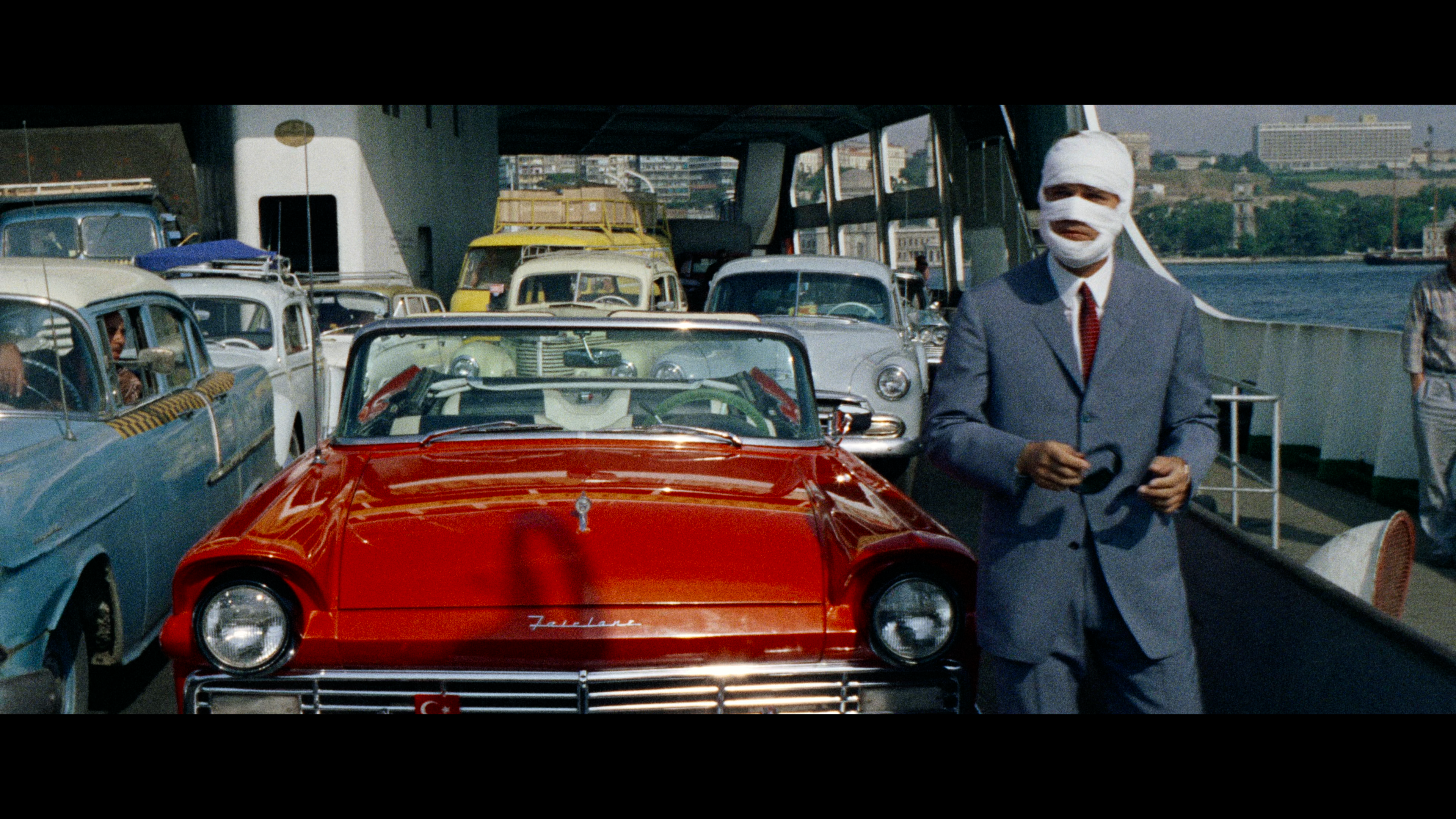
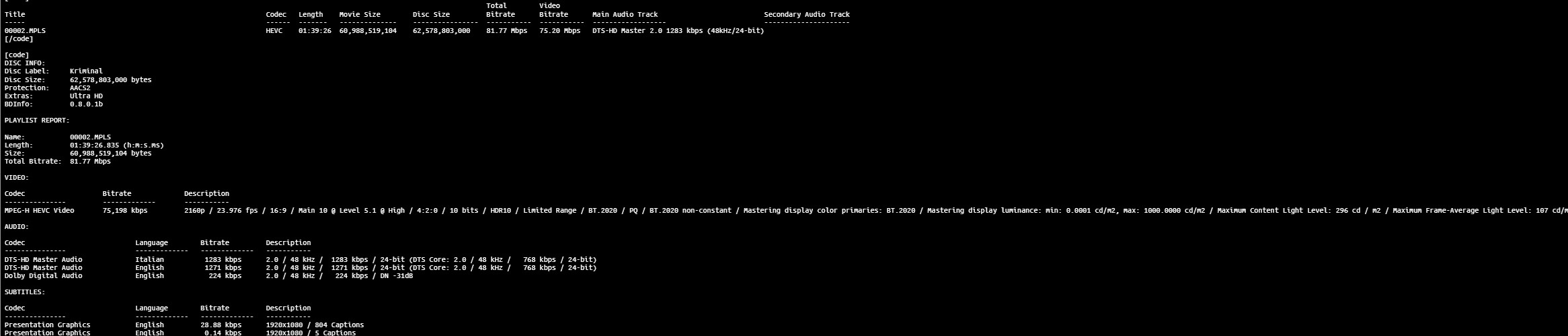
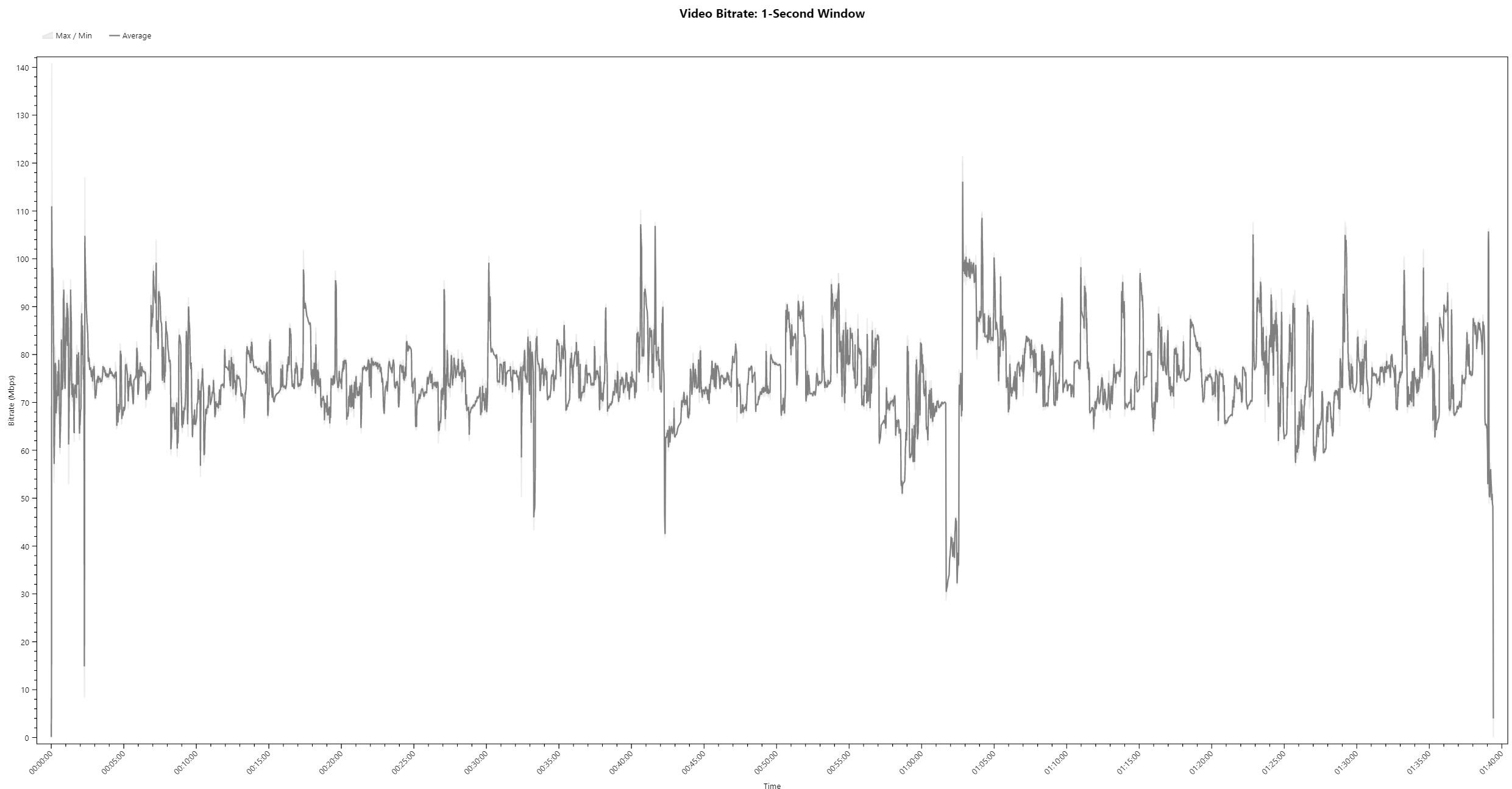
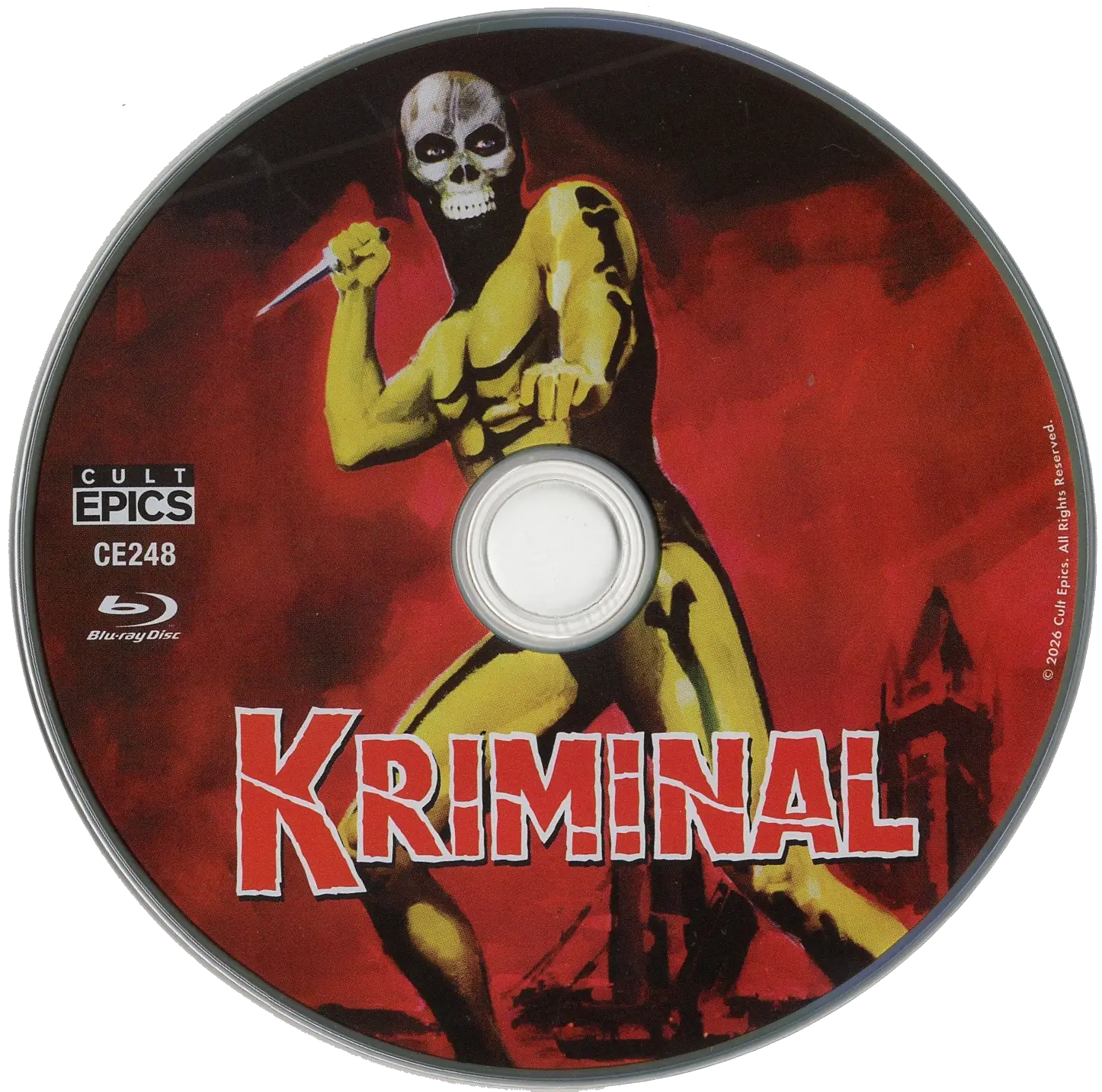
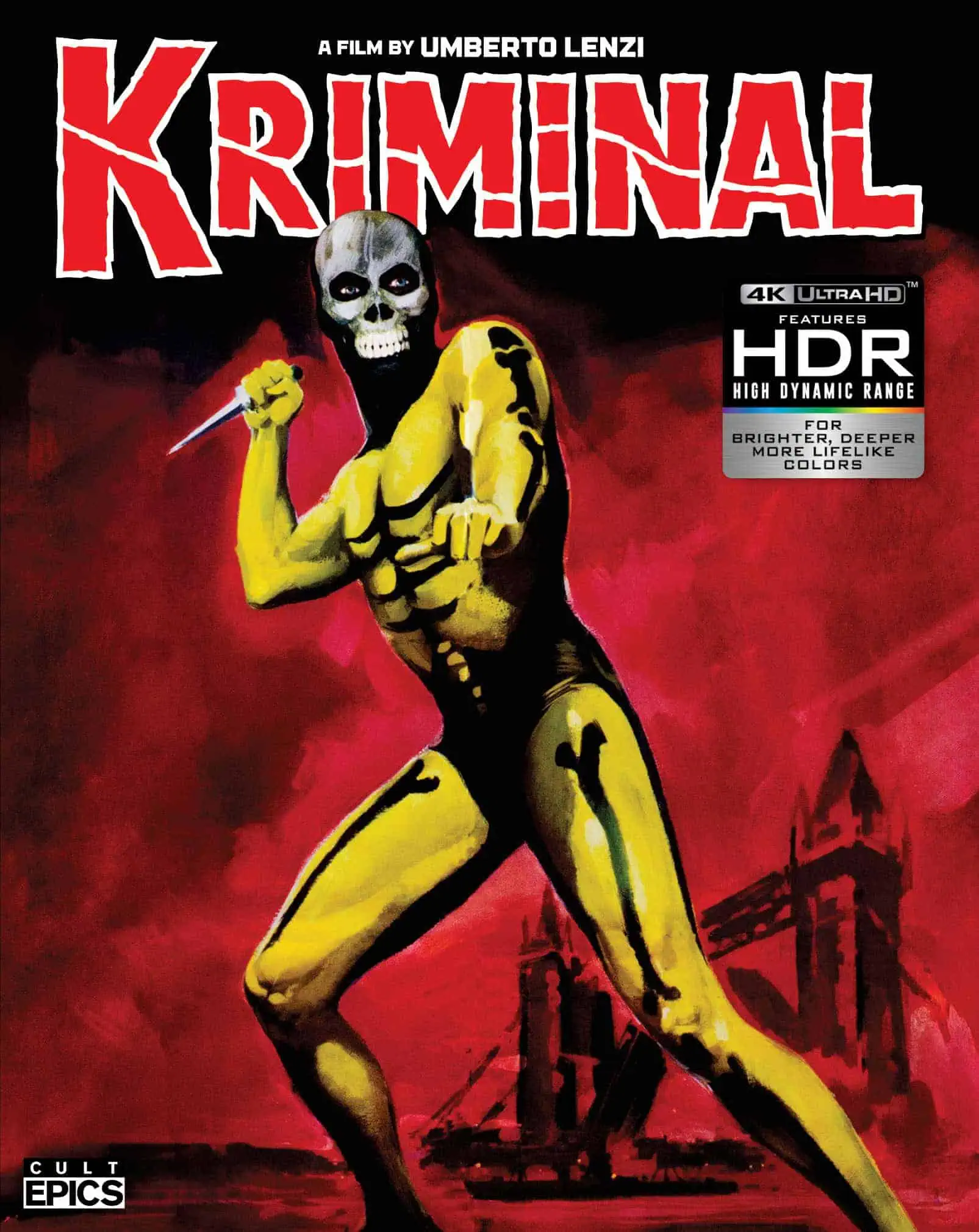
Cult Epics has released Kriminal on 4K UHD and Blu-ray with a new special edition that provides a new 4K transfer from the original camera negative. The results are spectacular. Medium-bodied grain resolves nicely particularly on the UHD, revealing loads of visual detail while also managing the film’s outdoor light levels. As stated earlier, Kriminal‘s locale cinematography is beautiful and this transfer ensures all of the background details and, more specifically, the Turkish interiors are preserved. An HDR-10 layer provides a good color grade, in particular providing reds that stand out. Skin tones do skew quite tan, though not abnormal for this era of Italian cinema. Also of note is an HDR highlight during the aforementioned stealth sequence in the villa at dusk; the UHD expertly captures the dim but not entirely dark gloom, ensuring visibility without sacrificing the dusky grayish-blue lighting.
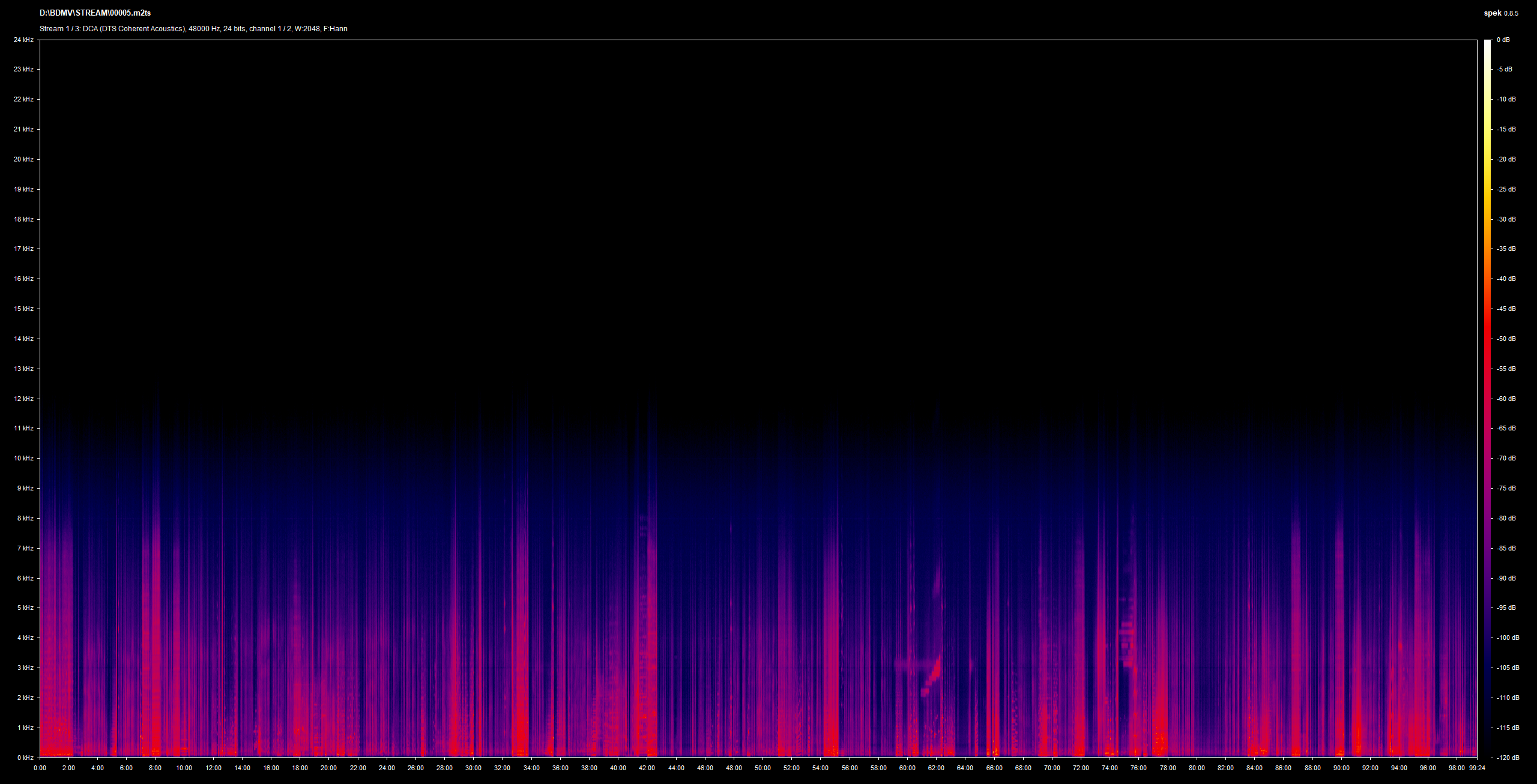
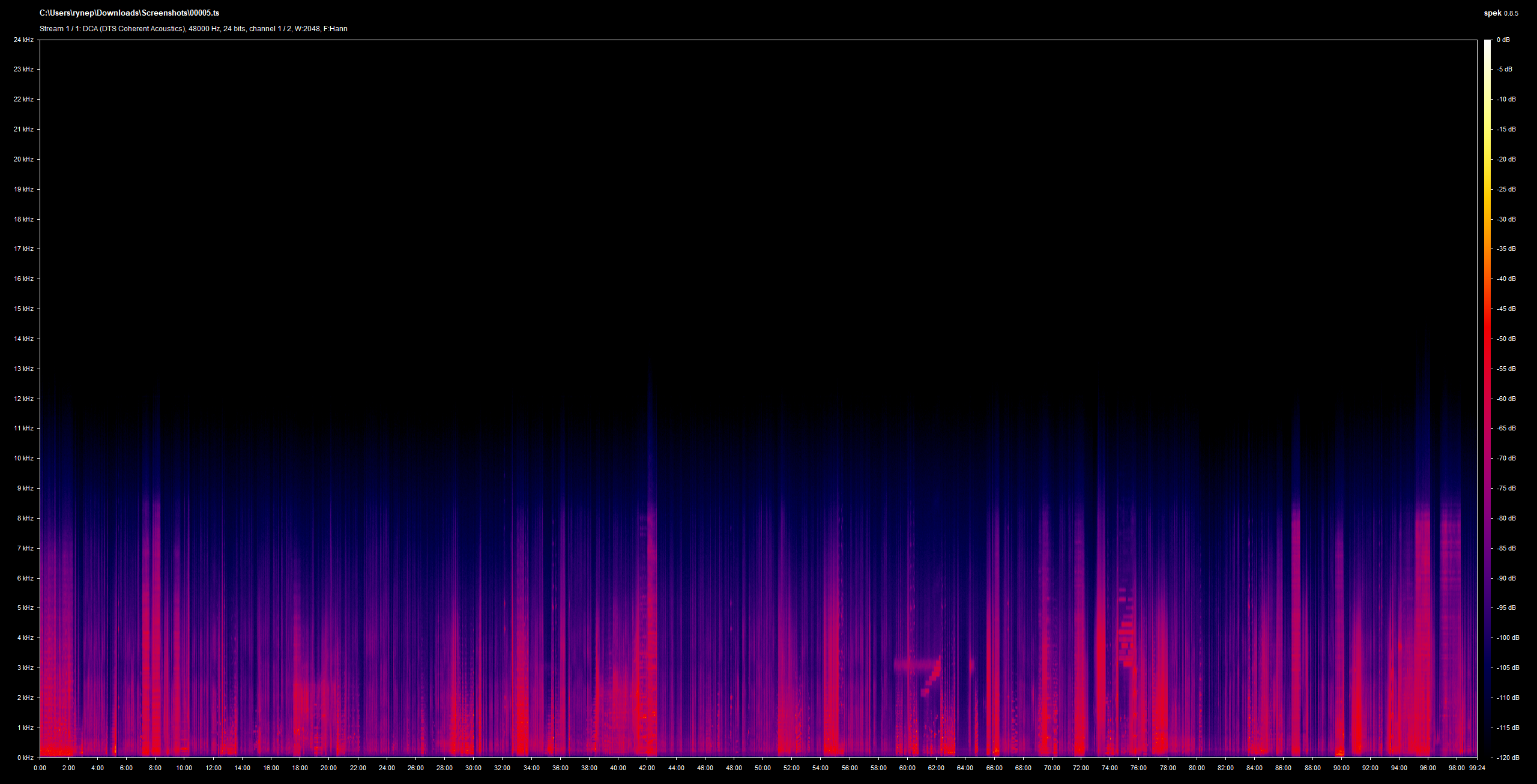
For audio, Cult Epics provides both a DTS-HD Master Audio 2.o mono Italian and English track. Both sound very good, providing a clear monoaural soundtrack that emphasizes a sly and mischievous jazz score from Romano Mussolini (yes, the son of that Mussolini). English subtitles are also included.
Cult Epics supplies a lot of supplemental extras here. Featured on both the UHD and Blu-ray discs is a new audio commentary with Troy Howarth and Eugenio Ercolani; it documents and highlights a lot of great context, including Lenzi’s work in the Eurospy sub-genre, background into the shooting schedule of the movie, and the director’s personal political beliefs. A great comprehensive listen.
Also of particular note is a new Umberto Lenzi feature-length documentary from Ercolani and Andrea Merconi. This feature draws on archival interviews with Lenzi, contextual information delivered by Ercolani, and interviews from other Lenzi collaborators. This works through Lenzi’s entire film career, even his lesser known and pseudonymous writing credits. There’s a 37-minute interview with Glenn Saxson produced by Cinema Nostalgia for their Youtube channel that runs through his filmic history including his start heading to Italy, his spaghetti western appearances, and eventually his role as Kriminal both for this movie as well as the sequel Il marchio di Kriminal.
A new interview with Pierpaolo De Sanctis dives into the background of the film’s soundtrack and its jazz roots especially as it relates to Romano Mussolini’s dictator father, who in public decried jazz music as “inferior” and yet enjoyed it in private. This ultimately led to Mussolini using the pseudonym “Raymond Full” in the credits for Kriminal. Along with this soundtrack-focused interview, there’s also a newly-created isolated film score that pulls out the full jazz score running around 50 minutes.
Since this release restores the English translated comic animation for the opening credits, Cult Epics has provided the original Italian credits as an additional extra. A theatrical trailer (both UHD and Blu-ray) and promo gallery are also included.
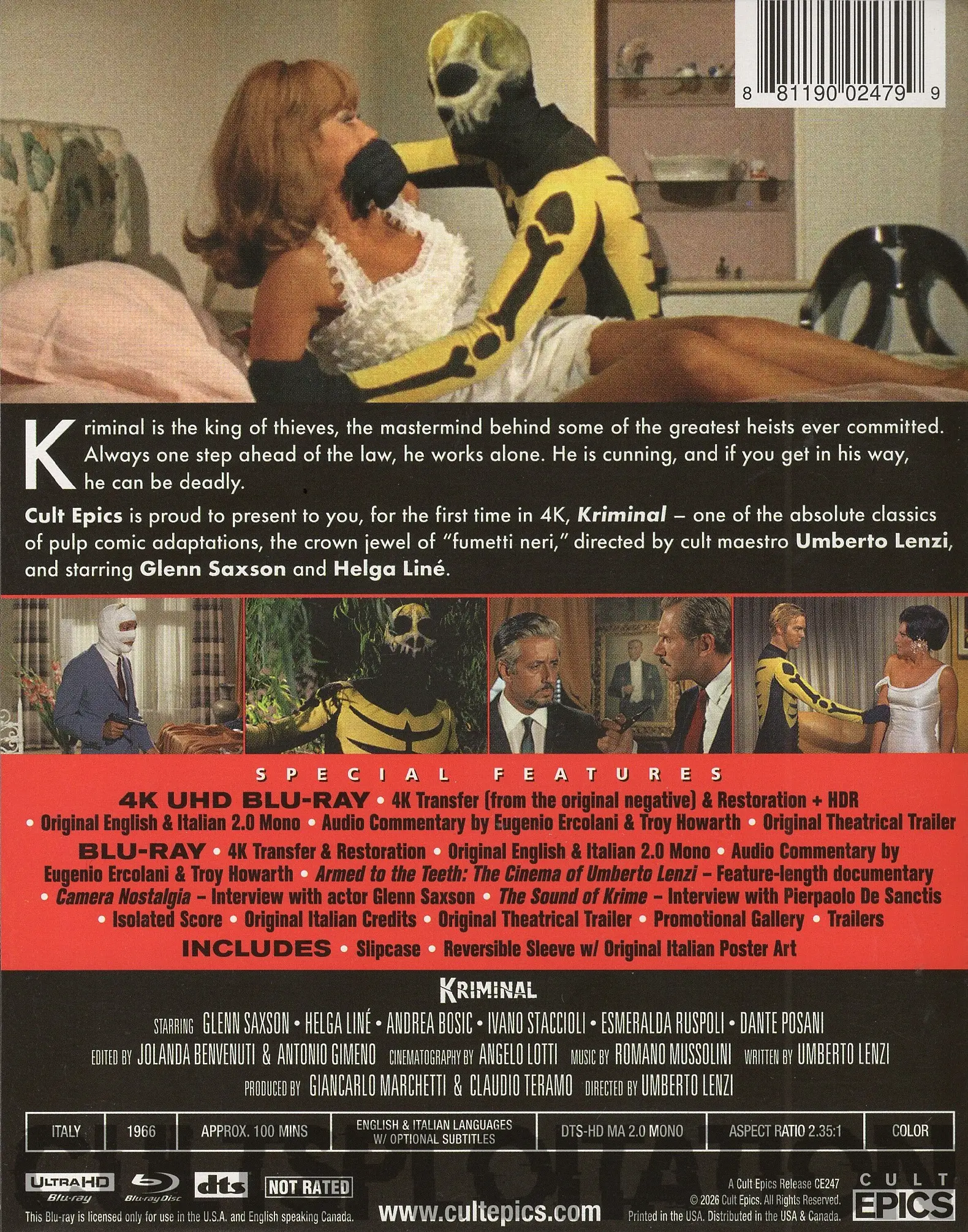
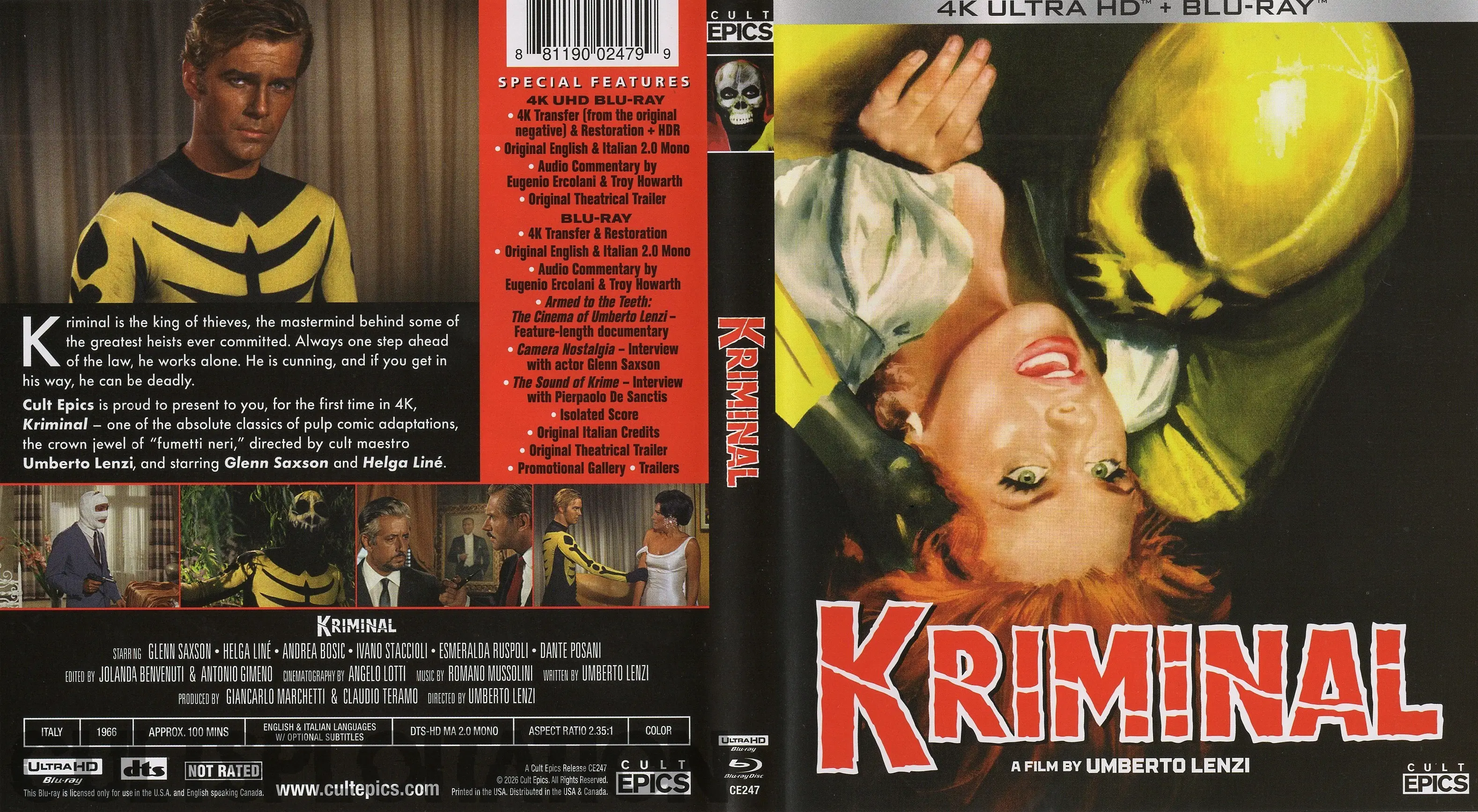
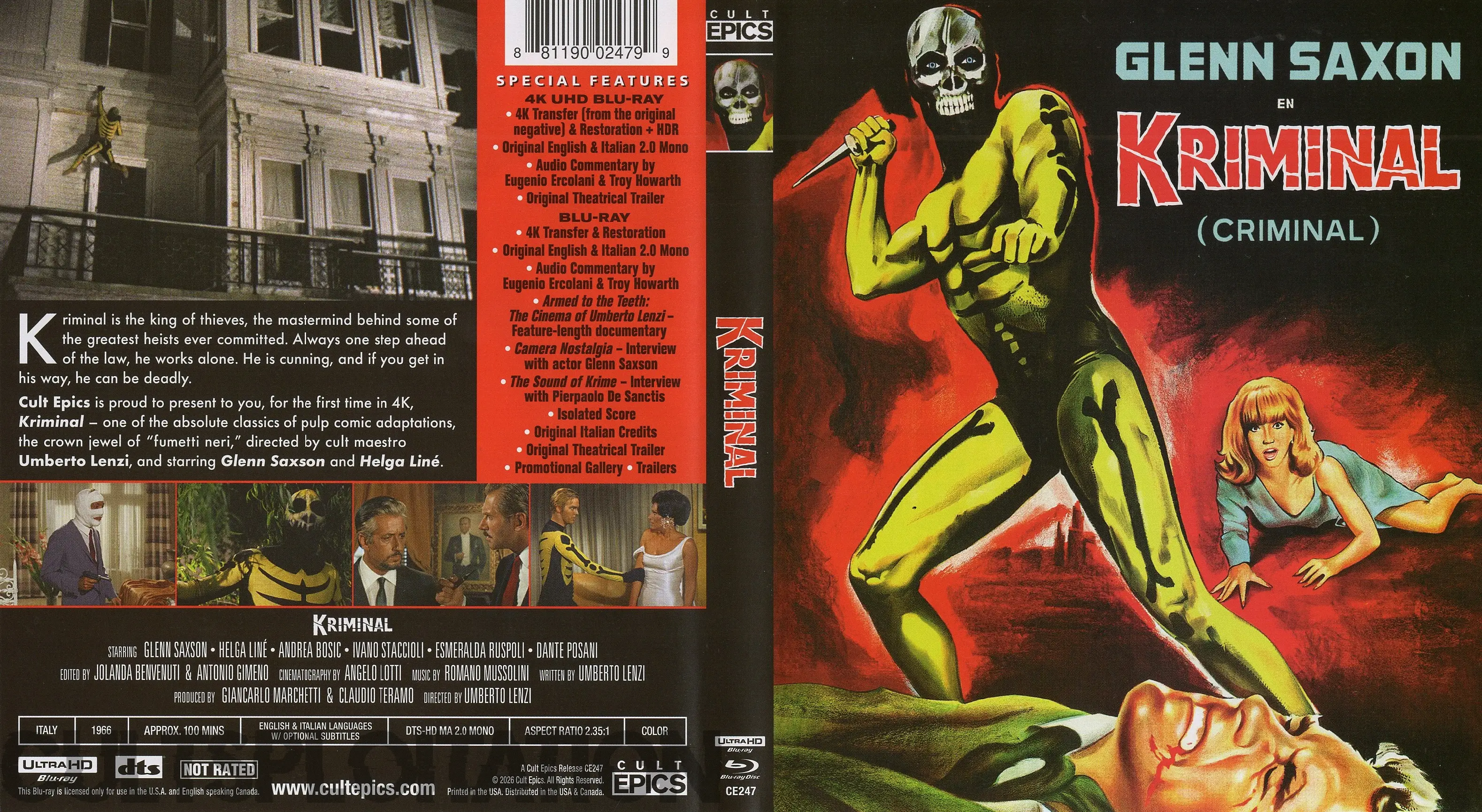
This special edition also contains reversible cover artwork and a new slipcover.
Extra Features
DISC 1: 4K UHD
- NEW 4K Transfer (from the original negative) & Restoration + HDR
- Original English & Italian 2.0 Mono
- NEW Audio Commentary by Eugenio Ercolani & Troy Howarth
- Original Theatrical Trailer (1080p; 3:38)
DISC 2: BLU-RAY
- NEW 4K Transfer (from the original negative) & Restoration
- Original Mono English & Italian 2.0 Mono
- NEW Audio Commentary by Eugenio Ercolani & Troy Howarth
- NEW Armed to the Teeth: The Cinema of Umberto Lenzi – Feature-length documentary (1080p; 1:28:40)
- Camera Nostalgia – Interview with actor Glenn Saxson (1080p; 37:34)
- NEW The Sound of Krime – Interview with Pierpaolo De Sanctis (1080p; 24:48)
- NEW Isolated Score (50:58)
- Original Italian Credits (1080p; 2:55)
- Original Theatrical Trailer (1080p; 3:38)
- Promotional Gallery (no chapter breaks; 2:37)
INCLUDES:
- NEW Slipcase
- NEW Reversible Sleeve w/Original Italian Poster Art
Verdict
While mileage may vary on audience appreciation of this fumetti neri film, Cult Epics’ UHD release offers an eye-catching transfer and plenty of extra features that are overseen by Lenzi expert Eugenio Ercolani. Lengthy featurettes and supplemental materials provide an excellent oversight of Kriminal and its lineage in Italian cinema. Recommended.