

Episode: 362 • Duration: 01:08:59
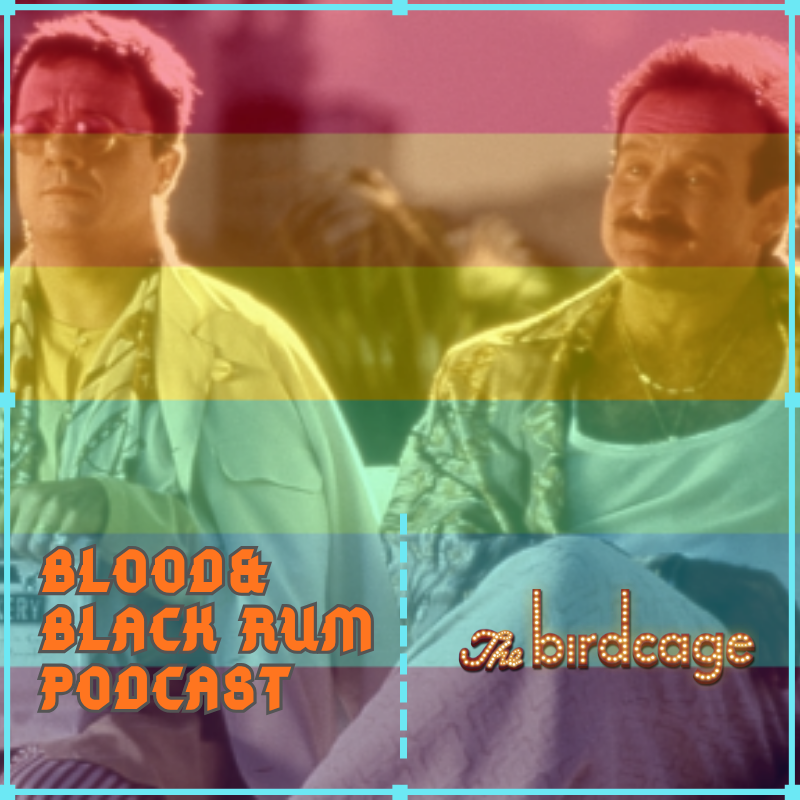
Happy Pride Month! We’re celebrating with a movie that may just have Robin Williams’ most handsome appearance – The Birdcage! In this very gay episode, we discuss everything from Nathan Lane’s expertly flamboyant performance, to the themes of acceptance and more importantly, actually being yourself, to Hank Azaria’s buttcheeks.

We’re also drinking Tree House Brewing’s Double Rainbow double IPA for an extra thematic resonance.
Approximate timeline
0:00-11:00 Intro
11:00-19:00 Beer talk
19:00-end The Birdcage
We’ll be back in a couple weeks with more episodes!
Hit that play button above to listen in.
Transcript – This Podcast is Gay | THE BIRDCAGE (auto-generated)
Click to expand full transcript
0:02
Oh, I’m calling.
How can I Pierce the dose?
We’ve been robbed.
0:55
Hey, welcome back to the Blood and Background podcast.
I’m Ryan from closeplatation.com and I’m joining my Co host Martin.
How’s it going?
Doing pretty well.
I thought you were.
I thought you would open us up with a little bit more of a, a more flamboyant gayer opening because today this podcast is gay.
1:13
We are very, very gay.
We’re celebrating Pride month, which apparently no one is this year.
It’s a, a lost, lost holiday at this point, only the only the gays are celebrating Pride month.
Everyone else who used to chime in and be like, hey, we like these too.
1:31
Sometimes they’re not doing it, but you know, we, we, we tend to, we try to try to do a nice little episode centered around Pride month and centered around topics that, that are situated around Pride Month.
1:48
So it was only fair that we, we did an episode this time.
I think last time one of our episodes that we did during Pride month was was a a John Waters movie, right?
Yes, that was the last one that we did.
Yes, and we toyed with doing potentially another one of those or but but instead we decided on a movie that I think is near and dear to Martin’s hearts, not so much mine.
2:12
I hadn’t really experienced it a whole lot.
My my wife really loved this as well growing up.
This movie, it was a a big one for her too.
So it seems like you 2 have a lot in common from when you were growing up.
You shared the same types of movies during your your formative years.
2:29
Yeah, we were secretly having family dinners together.
Apparently so, yeah.
But was this a was this a family movie for you?
No, in fact, yeah, I was going to say, it seems we had it on VHS.
2:46
And I remember as a kid looking at it like the bird cage, the Rock Williams.
Look, look at him.
Looks you know we’re doing the bird cage.
Sorry.
It’s yeah, right.
You kind of you kind of put that one in there.
It’s.
Like a fall on the piece.
I should have done that.
3:01
I should have should have chimed in with a nice little.
No anyway.
We’re doing the bird.
Cage.
Hello.
Well, we’re doing the bird cage.
We had it on VHS and I it’s like, I don’t understand why, because my mom is a prude and I don’t know right, And I don’t think my dad like, like, I mean, he it’s not like he, you know, was bigoted in such a way.
3:27
Sure.
I don’t know what would have appealed to them in this sense, because it’s not like it rings.
It’s like, you know, like a film that they would would have wanted to see.
It’s.
Not a It’s not a Waspy type movie.
To be in.
Not that I’m saying your family was Waspy, but just in general, it is funny to see like how proliferated this was throughout the 90s in potentially in homes where people now would be like the gays.
3:55
They’re stuffing it down our throats.
They probably, they probably got it because like either like maybe like they came with like the entertainment set that my aunt from like great aunt from Las Vegas, like sent out and there’s, there’s a collection of tapes or there was like, you know, they saw Robin Williams and like, oh, maybe that.
4:14
‘D be fun like.
Sure, they just like, you know, they just didn’t put didn’t think about it.
Yeah, I.
Can see that.
I can see that.
I think, you know, the Robin Williams, Gene Hackman connection there is sort of done in a way where it’s like, oh, I like Gene Hackman, you know, like I, I like Gene Hackman.
4:31
He’s, he’s fun.
Oh, Robin Williams, he’s funny.
This is going to be a funny 1.
And you know, even even with the poster artwork where you see Robin Williams looking very, you know, suit and with an excellent get up going on, I mean, just fantastic, looking at the like, floral print jacket and the pink billing pants that he’s got on, it’s amazing.
4:56
But I think, yeah, you’re right.
To your point, it’s probably something like that where people were sucked in by like, oh, it’s got Robin Williams, it’s got Gene Hackman.
Oh, it’s got it’s got Calista Flockhart in it, even though she’s not even mentioned that hearing three, you know, Ellie Mcbeal very popular popularity there, but.
5:18
Maybe you want that.
I just, I just made not connect to the dots.
Maybe that’s why that’s my mom loved Twist of Flock, and she loved Ally Mcbeal.
Yeah.
So I mean.
So I mean, maybe that’s how we came about it.
But regardless, like if you were, you know, I don’t ever remember seeing commercials for this film on TV as a kid.
5:41
So if you were and you look at just the box cover for the VHS, you would think like Birdcage, Gene Hackman, Diane Wiest, East West and you know, look at them.
They’re looking surly.
5:56
And then, you know, Robin Williams is looking dapper and delightful and Nathan Lane looks like, you know, just like some guy.
Like what’s what kind of shenanigans could they cut be getting into?
What’s this Nirvana like tagline come as you are?
I don’t know, yeah.
6:17
Then maybe they, yeah, maybe some people are drawn in by that as well.
Would have been a better cabaret instead of saying we are family.
Do you think if they went with the original French theatrical title La Casa Foux, do you think that would be as as inviting to people?
6:37
You think they would be like, oh wow, that sounds so exotic and.
I don’t think it would have got.
Vinci Yeah, I know, I know.
Yeah, I’m.
Going to say if they like, if they did a remake of that film, like right, like in the 70s, like, yeah, they can get away with it because it’s 70s.
6:54
They greenlit anything.
We we’ve done fucking bunnies, you know, with Leonard Nimoy and not Leonard Nimoy fucking Bones.
So, you know, yeah, that would have gotten green lit.
And the 90s, Hell no.
You know, they were only, they’re only betting on like, you know, winners like in things they think that you know will sell.
7:13
I do.
I definitely think like the idea is it’s it’s interesting, right?
The idea behind the bird cage being a fairly popular movie at the time is very interesting.
The the proliferation in 1996 of this movie that is sort of even today, sort of like a little, you know, would be considered a little bit maybe what’s the word I’m looking for?
7:42
Maybe, you know, decentious, you know, with with the the topics that it explores is is surprising that it actually did so well in 1996.
And we’ve kind of like take almost taken a step back here in the recent years of people probably watching the birdcage now and being wow, it’s so gay and they’re just trying they’re just trying to ram it right, right down your throats.
8:08
And you know, to to their point, I mean, gay people love ramming it down throats.
I mean, wasn’t everyone?
Of course they do, right?
Of course they do, but but in.
Where’s the where’s the where’s the rim shot?
You know, but in the scheme of things, it is very, it’s, it’s very interesting and I am really curious to explore more of the the actual release of the film.
8:36
And it’s a reception because I haven’t really done that much research into it, but, you know, I think that it’s an interesting time period to explore how the Birdcage came out and kind of captured some people, even though this might have been something that that, you know, a topic that would have been a hot button issue even at the time and, and even now.
8:58
And we’ll talk about that as we get into the movie and and what kinds of themes and stuff that the Birdcage really explores in this this movie adaptation of what would would have been a play.
But any anything else you want to add in the introduction here before we?
9:14
We move on.
Talk about the the beer and then the movie itself.
No, I think it’s you covered it well, you know, I’m glad that we’re doing it.
I’ve mentioned the movie a bunch of times on the podcast because I do think it’s like an underrated, you know?
9:30
Just yeah, I mean fun.
Fun, fun film.
I think it was a rated film.
Like, you know, people enjoyed it at the time and then now it’s kind of like it’s not as popular now anymore.
You know, here it’s literally the 30th anniversary of the movie released in 1996.
9:47
Here we are in 2026.
So it is the 30th anniversary.
And I think it’s, you know, kind of fallen to the wayside a little bit.
You don’t hear about it as much anymore.
But I do remember that there, you know, even like again in 1996, we would have been fairly young.
So we would definitely not have experienced it like directly when it released theatrically.
10:08
But even throughout the years, the Birdcage has been mentioned quite a bit.
And I, I do remember it getting played on TV quite a bit as well.
It had, it had some major air time at some points.
So it’s it’s interesting that it’s kind of falling out again and maybe not as well recognized now with with younger audiences.
10:27
So all right, so let’s talk beer because the beer is actually the hold up for this episode.
The reason why we we were not on the regular Friday release.
We were going to release this episode on Friday and obviously get it done on time and everything.
And then I, I had got a beer that we’re going to do directly for this show because this show is very gay today and we wanted to tie the beer in with being a super gay beer.
10:54
And so we had to wait for the beer and when I ordered it, I, my sister picked it up and I didn’t have a chance to grab it from her until today, which is why we’re recording and, and posting this late.
The beer that we have on the show is from Treehouse Brewing.
We’ve had Treehouse on a few times, very probably one of the bigger names in beers at this point now for what would be considered a, you know, microbrewery that has now become macro because it has like 5 different $1,000,000 locations and.
11:24
You know, I was just going to say I’m on the website.
They have a place in Woodstock and Boston.
Now, yes, Boston, they moved into Faneuil Hall.
They have, I think they took the Cheers location in Faneuil Hall and they are now there and they may even be getting into like the Red Sox games.
11:43
I don’t know.
It’s they’re they’re really picking up steam as one of the giant beer corporations.
One, even though cheers doesn’t.
No one cared.
It’s Cheers.
You can’t get rid of cheers now it’s Treehouse Cheers and you can’t actually cheers because that’s a rule on the list is you can’t actually do a cheers.
12:03
You could break the glasses.
No you can’t.
Cheers anymore.
What I would say 1 stock makes sense because you know, it’s somebody who’s gone to see Com sits down there.
It’s very hippie, liberal, bourgeois nonsense.
You go to a concert and it’s like, I can get a lobster roll from the food truck here.
12:23
Yeah, you know what?
I don’t want to pay $35 for a lobster roll.
Watching Drive by Truckers shows great.
Not a great idea though.
Point being a side, but yeah, like fucking Boston side right here.
Fuck.
Fuck Boston, fuck the Red Sox, fuck the Bruins, fuck the Celtics.
12:42
Go next.
You know, fuck the Revolution, fuck the Patriots the most.
But who’s going to a goddamn Red Sox game?
Fenway.
I’m going to pay $20.00 for a fucking big, you know, tree house.
That’s why I don’t know if that’s true.
12:58
I don’t know if.
I was, I was surmising that.
They, I know, but listen, listen.
But even if they did wait, you got to get your Gansett, got to get your Narran Gansett.
It’s what Hooper drank.
It’s what Dan Williams drank.
Terry Ball, I fucked Boston.
13:16
It’s true.
Sorry.
Are you done?
Are you done with your diatribe about Boston?
I had to get it out.
Dad was.
Wearing a beer that we have on.
All right, so we got Treehouse and like I said, my sister had to go and pick it up.
But what I ordered was it was a kind of a cross between a couple that were there.
13:31
There are treehouses celebrating their 14th anniversary.
So I did get that.
But and then we decided, you know what, we’re doing the birdcage.
We’re super gay right now.
We’re going to do the double rainbow, which is perfectly gay for the bird cage and the can is awesome.
13:48
It’s got like a nice tie dye rainbow color.
It’s obvious that this is being done for Pride month because they’re only releasing it now in June, though they’re not like explicitly coming out and saying like, hey, this is for the gays.
This is for, you know, we’re in support of the gays.
14:04
They’re not saying that, but but but it in in essence, that’s what how we’re taking it that the double rainbow can is for pride month.
And so we’re doing it for the birdcage because it just makes sense.
It’s just a nice thematic tie in.
And so that was the hold up.
And that’s the reason why we we were kind of off on our schedule.
14:24
But this double rainbow is, you guessed it, you know what Treehouse generally does?
It’s a double IPA.
It’s a double New England style IPA and I think the idea behind this is the rainbow part of this, besides the fact that the can is rainbow and the can is awesome.
14:43
Like again, like I said, the can is really cool looking, but I think the idea behind this is that it’s a rainbow of citrus fruits kind of all combined into one.
I think that’s the theme of this, this beer where it becomes sort of like this very citrus.
They’re calling in a tropical fruit salad type thing.
14:59
And I get that.
I think that that’s that’s pretty much how this beer tastes.
Tropical fruit salad is kind of like how all New England style beers kind of to end up starting to taste after a while because when you’re adding although all those citrusy type hops, it tends to just kind of float that way.
15:16
But I would say that this definitely gives off some of those really strong tropical notes of like papaya, pineapple, maybe a little bit of like tangerine orange, those kinds of citrus flavors too.
Make it into what what you might consider a pretty bog standard or maybe like the epitome of a New England style IPAI.
15:39
Don’t know if you feel the same, but it like I I think this is really good.
It’s obviously a very quality beer from Treehouse.
It does taste very similar to a lot of other New England style IP as is what I would say with the tropical fruit salad flavour.
Yeah, it’s good.
16:02
You summed it up pretty well.
I get big hints of like the pineapple guava.
Yeah, guava pie it for, you know, for double IPA, it is smooth.
It does have a hop kick on the back, which creates a nice rosnie, you know, after taste at the end.
16:27
It’s very good.
Do I feel like it’s still a lot of if it’s like much of a variation of on like the styles that they usually do.
Now it’s like fight ends, like it’s once you’ve had like couple, they all kind of start to blend together.
16:45
I’d say maybe this one might be a little bit too Ross Any for people who like night plus because it does, you know, round it out the back pretty hard.
But it is, you know, a damn good double IPA.
It’s drinkable, it’s refreshing.
17:03
There’s a nice bow feel to it and the cans awesome.
I love the can.
Like it’s just looks, you know, So cool.
And inviting.
Inviting for the gays?
Yeah.
I say that and I keep saying that I am.
17:20
I am not gay, I am very straight but.
I know you mentioned your wife earlier.
Yes I I, but but my my soul is with the gays.
If I could be I would also be gay.
Your ally.
Yes yes, I’m ally.
17:38
Yes exactly.
Again, I, yeah, I, it, it’s just not, it’s not my lifestyle, but we’re here to celebrate it anyway because I, I love the gays.
I was going to like real quick, one thing.
18:00
How do you, how do you feel about like capitalist, like, you know, pitching like, you know, like using it as an opportunity to sell this shit?
Yeah.
I mean, that’s kind of what I was thinking about with Treehouse, right?
So this double rainbow, it obviously is released in Pride Month.
18:16
It’s obviously for Pride Month in some capacity to showcase that, but they’re not explicitly saying that like they’re not on the can.
It’s like gay, gay, gay, gay, gay love gays.
Please buy our beard gaze.
You know, stuff like that, which is probably what I would gravitate towards more than when a company is for 11 months out of the year, doesn’t mention anything for fear of reprisal from any other part of the you know, their their market.
18:44
And then one month a year, they’re like, Hey, here’s our gay Facebook cover pay picture to let you know that we also like gays sometimes.
Yeah, no.
It’s I think the only way it’s good, like especially if it’s like big corporations and stuff like and not like, you know, earnest, like when the Yankees and bills, like, you know, happy pride month and then everyone it gives like, you know, it’s like, do they really care?
19:13
No, because they just want money.
But at the same time it gives you an opportunity to see who in 2026 are still like fucking God damn can’t believe it.
Right, right, right, yes.
And so I, you know, like, I think there are, I think there are good intentions sometimes to it.
19:31
I think there’s also corporations who show, who show throughout the year that they are also allies for, for gay people.
And so I think it’s really dependent, like do they show it in other capacities outside of just Pride Month where they can take advantage of the the corporatism and the capitalism of what that offers?
19:50
If so, then I think it’s fine, you know, that you’re promoting like, OK, great.
We are definitely, you know, showcasing Pride Month right now.
But if it’s like the only time you ever take a mention or stand, then yeah, I think that’s problematic in that like you need to show more.
20:06
Support because it’s OK to have like President’s Day sale or, you know, 4th of July sale or something because, you know, it’s a celebration stuff.
I mean, yes, pride is a celebration, but like, you know, Martin Luther King Junior Day and like Black History Month, it’s you know, the history, the struggle and stuff.
20:24
And I think, you know, the using it as an opportunity to be like, yes, we, you know, like come to target, we have all the pride shit in the world, you know, like it’s yeah, it’s, it’s, you know, it’s gross.
20:42
But like, I understand, I understand our shitty system.
But at the same time it’s like, you know, like, listen, you know, it’s, you know, it’s about being, you know, and that’s the thing too, because it’s like a little side tangent here, but it’s like, this would be the perfect opportunity to like for them to be also showing like if you really want to be an ally or, you know, whatever that like, hey, why do we have prime month to begin with?
21:09
Well, back in the day you used to get stoned for it and killed.
So you know, there’s and being, you know, as Ryan is sis wasp male, you know you were you were fine.
21:26
So, and you know, well, I.
Don’t know, I feel very persecuted when people aren’t talking about me specifically during pride month.
I’m like, well we yeah, but what about me?
What about what about my struggles joke?
21:43
Yeah, no, I agree.
I think that’s, again, and that’s, you know, obviously not what we’re doing here at Blood and Bicrum Podcast either.
We’re celebrating Pride Month, but we talk about gay stuff all the time, you know, Come on.
We’re always, we just said show.
Girls.
Yeah, we’re always gay.
Yeah.
And actually, that was kind of.
21:58
I did think about that too.
You know, as we get into discussing the bird cage is that we just kind of did a movie with, you know, especially towards the opening of this movie where they have, you know, they showcase the birdcage specifically as this nightclub scene where they’re doing, you know, cross dressing and, you know, drag Queens and stuff like that.
22:18
I was thinking like, oh wow, this is a nice little, you know, foil to Showgirls, you know, a little bit of a different perspective.
Like everybody loves each other in this in in, you know, this show, this nightclub in the Birdcage and and Showgirls, everybody’s out to backstab each other.
22:41
A little bit of a different perspective there, so.
So what?
So what are you saying that those are?
These are both films that I suggested.
Yeah, I don’t know.
I don’t know what I’m saying.
What am I?
What am I saying about that?
That I have great.
That I have great.
Taste.
Apparently so, yes, apparently so.
22:56
Or apparently you were already hinting at something when you were like 11 years old.
That was it was just already out in the open for you and you were like you were discovering something about yourself that that’s right.
23:16
All right, let’s talk to Birdcage specifically.
Let’s see, let’s really get into it.
So first and foremost, like the opening sequence where you see Robin Williams just looking magnificent, just looking so dapper, just, you know, as Armand this, this very, you know, very buoyant individual with a nice fantastic mustache.
23:43
And you’re thinking, why does Robin Williams not have a mustache more often?
Where what, why did someone not say Robin Williams, you look amazing with a mustache.
You should just keep it all the time it.
Goes it goes so well with his, you know, his, you know, grizzly, you know, look of like her suit.
24:05
Yeah, he’s, he’s very, her suit is the, I think the clinical term for him.
You know, he’s got it because in a couple of scenes he does have his shirt off or he has his shirt unbuttoned and open and you can just see he’s just just rippling with chest hair and back hair and arm hair and all kinds of hair.
24:21
And, you know, again, I think that that’s like he’s a perfect candidate for this movie.
Of course, he’s the nice, you know, bearish man in of the the gay couple.
It’s perfect for the movie.
And I think like, again, it’s a nice it’s a nice side that you kind of are treated to for Robin Williams immediately again, like in 1996.
24:45
I don’t want to say this was brave because I don’t ever want to say like a straight person playing a gay person is brave, right?
Like it’s, you know, the obviously they can go back to their normal life after and be like, no, look, I’m straight, you know, like it’s not that brave.
But I got paid $4 billion.
I secretly, you know, I hate.
That yeah, right.
25:01
Like I’m not, I don’t want to say it in that capacity.
It’s not it’s not like brave, however, you know, people just living their life is brave.
But the way that he does portray this in such a way that he kind of leans into this part and is just obviously very open to playing this role is very nice to see immediately.
25:21
Like he just has no qualms about playing a role like this.
You know, obviously this would not be a role that every person would would be interested in playing.
I’m sure.
I don’t know if I don’t know if Robin Williams was like the main person that they offer this to.
Again, I don’t really know that much background about the movie, but I mean, I, I can see some other these more masculine people that they could offer this to you that were really popular in the 90s, who might turn this movie down because it’s not really in their wheelhouse or they feel like they could not accomplish the goals of, you know, what this character should should have as a personality.
25:58
But I think Robin Williams really leans into it.
It’s a great way to showcase, first, how much of an ally he was and then secondly, how good he is at transitioning himself into all kinds of characters.
You know, he he does a great job of really selling this perspective that he is a gay man in this movie.
26:20
That is, you know, again, he’s sort of on the he’s sort of the masculine side of the gay mirror.
The well, they’re not married.
Obviously they couldn’t be in 1996, but the the gay relationship, he is more of the masculine side and that works really well for the bird cage as a whole, especially, you know, considering that Nathan Lane as his Co star is obviously meant to be the the the much more outright flamboyant character, the queen, if you will, of of the movie.
26:48
So I don’t know.
Did you Do you feel the same about Robin Williams?
Yeah, according to Wikipedia, Trusted Source Wikipedia, Nichols originally thought of Robin Williams, and you want Steve Martin to play the in it as well.
27:05
But Steve.
Martin OK, Yeah, I mean, I could see, I could see Steve Martin as well, but maybe not as well, not as.
Well, he said he didn’t.
Well, he turned it down not because he’s like he said, I hate the gays, but as he whole.
He didn’t use his quote.
You don’t.
You don’t take that away from him.
Quote him.
27:23
But he said he didn’t think he could bring to camp and Robin Williams didn’t want to.
He want he wanted to be Armand.
He didn’t want to be Albert because he just did Misses Doubtfire, which when you watch this film with, you know, Nathan Lane does come across as like, you know, a, you know, even more flamboyant version of misses Doubtfire.
27:44
So, you know, worked out perfectly, to be honest with you.
I’m not saying replace Nathan Lane because he’s a treasure in this film, but like I would also have thought like, you know, like maybe Martin Short would be great for like, you know, as like Albert because he’s very, you know, Martin Shorty, like he’s very, you know.
28:04
Yeah, I mean, so I think that Nathan Lane is a perfect pick for for the character of Albert.
I mean, to, to first of all, I do think it would be sort of a, a detriment if they did pick someone who wasn’t gay.
I think that that is sort of because again, that could, that could make the, that could push the birdcage over the edge, because I think that’s the, the character of Albert himself being so flamboyant.
28:27
And so over the top is, is it straddles the line between we’re parodying an actual gay person.
And I think if you had a straight person playing him as a gay flamboyant man, it might it might be a little bit more offensive than anything.
Like, it might come off a little bit too much where they’re like really trying to play up like, look, this is the parody.
28:47
This is the caricature we see of a gay person.
Whereas with Nathan Lane, he is a gay actor.
He it perfectly embodied that and kind of I don’t.
Think I was just saying I don’t think he was out of that, he was out of the club.
Yeah, that may.
That may be true.
Yeah, that may.
Be true regardless.
29:02
No, I think he’s the perfect pick.
But I mean, I was just like spitball and like, you know, because, you know, maybe maybe Chevy Chase, Chevy Chase has a great record on these types of things, you know, but because again, like especially like in like the mid 90s, you know, for Hollywood, it’s not like there’s a lot of actors that could be, you know, you could get away with, you know, because like who’s like off the top of my head, the only person I can think that was like, and this is going to be bad on me, like outed, like, you know, gay actor at the time would be Harvey Feinstein.
29:38
You know, he’s, you know, Oh my, Oh my God, you know.
Right.
Yeah, yeah.
But no, he does.
And I think Robin Williams does a great job too.
Like he’s got a great mix of, you know, masculinity and but at the same time, you know, he’s feminine as well.
30:03
I think the time period does this great, you know, look, because again, it’s great contrast between what we see with Gene Hackman’s family and all of them with the suits.
You know, they got these beautiful flowy outfits in which it’s I mean, which looks good, which look incredibly garish by millennial standards because we’re the tight fit era.
30:29
But it’s you know it it it works with the with you know the.
With the vibes, right, Yeah.
Because like the theme, I the whole idea is like, look at how like kind of comfortable, like literally comfortable in the flowy outfits and just kind of like letting it out all hang out quite literally, you know, with the the open buttons and the jackets.
30:51
And and then you’ve got these stuffy political people coming in, you know, Gene Hackman as one of the vice presidents of the moral ethics like committee that he’s been running in politics for the the conservative campaign.
31:06
And you the, it’s the obvious allusions to the dress is, is, you know, right there that they’re in this very stuffy, very uncomfortable looking clothing and the gays are just out and about and, you know, very comfortable.
31:22
And living, yeah, living life.
And I think that’s a great contrast cause again, with, you know, Gene Hackman as, you know, Sander from Ohio, how stuffy and conservative, you know.
He’s literally always cheering around this tome as well.
31:38
He’s at his home.
He’s got like a, a thick tome of like, you know, legalese that he’s just reading over and.
Yeah, they’re just so, you know, miserable shits.
And then you go and see Robin, you know, Robin and Nathan Lane, and they’re having, you know, the time of their life.
31:54
And it’s like, yeah.
Because it’s like, even if they weren’t gay, like eat like, it would work as a theme of like, hey, maybe you don’t have to be so uptight you’re going to die of a heart attack.
It’s 42 because you’re, you know, making diamonds in your ass from, you know.
32:14
Yeah, I mean, I think.
From being so uptight, you know, I think.
Yeah, I think that idea that, you know, again, there’s like you said, there’s a nice contrast to kids because again, we, we see Ohio for a little bit, it’s cold, wintry.
You switch, you know that they’re they’re kind of inside.
And, and not, not only that, like the whole family too has to sort of be, you know, as a politician, they, they’re constantly under fire from, from interviews and the press.
32:40
And so we see them constantly hiding from the press and like sort of quite literally, they’re closeted, right?
They’re, they’re trying to be closeted because they don’t want their, their entire life to be public to, because they’re politicians.
And so there’s this, this hidden agenda for them to kind of sneak away and, and, and go on vacation.
32:59
And it’s kind of the opposite because we then we see South Beach, South Beach is very open as people in thongs riding around on roller skates and it looks very fun.
And everybody’s going to the beach and, you know, getting tan and having my ties at the, you know, the, the bar.
33:15
And, and I think like that sort of, you know, and again, too, that’s obviously a, an over exaggeration.
Like not not every gay locale is like South Beach where everybody is just so, so open and and, you know, free I.
33:32
Mean, even even still, it’s, you know, it’s South Beach, it’s hot as hell, like, you know, like you’re going to want to skate around with, you know.
Yeah, with your your body suit on.
Yeah, I’d like.
But I think like the idea of like is obviously there, the metaphor, the visual metaphor of it being so, so much more open and so much more freeing to be in this place.
33:52
And you know, the idea obviously of the title, the bird cage, a bird cage being a cage that a bird is forced to be into.
They’re stuck in.
They would love to fly free, but instead you’re making them stay in this cage is obviously an illusion to both parties, right?
34:09
The you know, it’s the obvious one would be the closetedness of gay people.
That’s kind of like a impulsed upon them by society.
But the, the other aspect of that is these people like Gene Hackman’s character who are just not even allowed to have fun.
34:26
Like it’s just not, it’s not accepted that like somebody like that could even enjoy life at all.
Like, even though they have money and, and power and, and fame, that they’re not even allowed to enjoy their life because they have to constantly be, you know, meet this conservative criteria of like, you’re all business and, and, and morals.
34:47
So no fun whatsoever for you.
Listen, God is not letting any of these assholes in the heaven wearing such a bag, such a baggy suits.
Poor tailoring in God’s.
Sense I got news again.
I got news for you.
35:02
The millennials coming in with blue and brown suits and tightening them up instead of these big quaffed, you know, nonsensical pieces like no, your zoot suits send you straight to hell.
That’s right.
And we and we and we talk about it later.
35:19
But like when we see like, you know, Robin Williams and that, like Nathan Lane, like dressed like that, they look so terrible.
Yeah.
When they try, when they’re trying to, yeah.
Play.
Themselves into a, a, you know, a lifestyle that doesn’t fit them.
35:36
Yeah, exactly.
And then The funny thing too, I think one of the greatest things is, you know, obviously the whole the whole idea of the movie, but is predicated around the fact that they need to hide their gayness because Gene Hackman’s fit in his family is coming and his their son Val is getting married to Calista Flockhart’s character.
35:55
What’s her name?
Barbara.
Barbara.
That’s right.
Such a such a formal name too.
I love that.
Like her, you know, for in the 90s her her nice, nice formal Barbara.
Not even like Barbie or, you know, Barb or something like that.
It’s got to be Barbara.
36:12
So the idea is that like Val is like kind of a shame easy.
He wants to hide this because he knows that they’re such a conservative family.
And so the the coming in, they they want to like get rid of all of the things that really make them who they are in their in their like apartment that’s above the bird cage.
36:30
And one of that is like they’ve got all kinds of like Egyptian like penis statues and stuff like that around.
And there’s a really funny scene where Robin Williams like, what if we just turn it around and it’s like still like a huge butt cheeked, you know, cherub that’s still turned around at them with their with the butt hanging out like very, you know, very thick.
36:50
And I, I love that scene.
And then and then when they get done with the changing it around after all the jokes kind of come and go, you know, with Hank Azaria being like, oh, you know, what if we put like, you know, this, this ridiculous, like play these playboys out.
37:06
And what if we you know, what if you do all these things that straight people do that the end result is basically like this very, very bland apartment complex where the only key item is like the the crucifix on the wall, the giant crucifix, the best.
37:25
Part about that whole thing is when we put the crucifix and Kazir as as Aguador.
Spartacus Aguador is like, look, it even came with books.
Yes.
Don’t have to read them because we’re giving it back.
37:42
I mean, it’s just like, it’s a really, it’s a fun joke of like how how persecution complex the like white straight person has of like, you know, this, this idea of Catholicism or even Christianity of just like this persecution complex that you must have in order to.
38:01
No, I was going to say they’re they’re not, they’re not Catholic because no, no, there’s a line in the film where they’re like, we can get the Pope to bless the move.
The thing like he’ll think he’s too liberal now too.
So.
You know, that’s actually pretty fucking we’ll.
Get We’ll get Billy Graham.
38:18
That’s pretty funny, though.
That line about the Pope in 2026, I think that actually translates very well to right now, as the Pope has been decrying some of the things that are going on in the United States.
And people are saying like, whoa, whoa, wait, wait a second.
38:34
Like, how would the Pope know about that?
Like, yeah, it’s quite.
Hold on, JD Vance, Mr. I just converted to Catholicism like 6 minutes ago.
Like Pope shouldn’t be talking about these things.
Shut up.
Like I’m Yeah, I was.
I was baptized Methodist.
So they’re all wrong.
38:49
That is a very appreciative joke.
But but I mean, it’s just, you know, it is, it is funny because but it’s still pressured today because you always have the conversation like from 1 Pope to the next, like once to woke and like he’s the fucking liberal.
39:08
And then like once like he’s just not doing anything, you know, But the whole the whole bit with like, you know, like him saying Billy Graham and stuff like, I don’t think a lot of people, thank God today are still, you know, had Billy Graham on their minds.
39:26
But it is, you know, real funny.
And it’s also funny too, because again, the whole reason why Gene Hackman’s, you know, families trying to visit Val’s family is not just because of the wedding, but because the guy that he was, you know, doing the whole, you know.
39:51
Moral ethics, yeah.
Moral Ethics a bit died sleeping with an underage black prostitute.
And he’s.
Yeah.
Like when they find out I’m like, CNN was like underage, you know?
40:09
And it’s just so funny because it’s like, you know, It’s like, you know.
It’s as George Lucas would say when it comes to Star Wars, it’s poetry rhymes because it’s it’s like a tale as old as time.
Like a lot of these people who were, you know, anti-gay or whatever the hell they’re, you know, secretly closeted or have their own, you know, demons because, you know, he can’t get off normally.
40:35
So that, you know, it’s just still funny to me.
And the fact that that the press actually is sitting out there, man, 2026, and they don’t even care.
Like, like, what do you think about?
Like, you know, that senator sleeping with an underage woman, You know, now they’re just like, yeah, he’s president.
40:52
What do you want?
Yeah, it is.
It is really funny.
I think like the whole idea of that being one of the more like the motivators and the more the one, the thing that’s really confusing the family the most about the, the sort of like misunderstanding that they when they come into the home and they think they are being very odd about their presence because they, they are very concerned about their role in the moral Ethics Committee.
41:22
And that guy that, you know, slept with the black prostitute is really funny because it leads to all these misunderstandings, like, Oh, well, maybe they’re acting strange because like.
They.
Don’t want us here because of how bad it looks for them and stuff, you know, like it’s, it’s a really great little, you know, misunderstanding that occurs in that in that role of, you know, and it kind of again, it kind of shows the idea of like both parties are kind of ashamed of who they are in some ways and sort of stuck in this in this closet of, you know, feeling like they are being belittled by the other side.
42:02
And I think that that works really well.
You know, again, one of the ways that people can relate to a movie like this when they aren’t gay is to put them in a perspective where they can relate to it.
And I think that that idea of having this very uptight white family come in and and be feeling like they are the ostracized people is a perfect opportunity to make that statement of, you know, like how how others feel, you know, not just gay people, but, you know, anybody.
42:34
The difference, the difference in TuneIn, the closeting is very, you know, telling too.
Because again, with Gene Hackman, as, you know, a senator from Ohio, all for politics and all for image and whatever, Robin Williams and Nathan Lane are doing the bit and being closeted because for the love of their son Val.
42:55
And he doesn’t want, you know, to give a bad impression, as horrible of a reason as it is.
And they are very resistant and hesitant to it.
But, you know, Robin Williams, you know, ends up, you know, being like, OK, fine, I’ll do it because I love you, my son.
This is the one time I’ll do that.
43:12
So I mean, there’s also that too.
Because again, they’re like, this is the one part of the film that I do have a problem with.
Like, you know, it’s 1996 and like the whole like Clinton, like, you know, you know, letting, letting the gays into the military, you know, the, you know, don’t ask, don’t tell policy and stuff.
43:36
Like I get it.
But if you have been openly gay like your entire life and your son has been with you for that entire time, even if he was to be in this situation to marry a girl whose parents are this concerted bunch of I don’t like, I just I don’t think it works like on that level at the very least, because I don’t see why at that point, like unless, you know, because the film isn’t really exploring, exploring or anything.
44:11
But that would also mean that Val’s also, you know, has his own, you know, bigotedness and they don’t show that or anything like that.
He’s, you know, ashamed to have.
I can’t.
Hear that?
Yeah.
I mean, I think like there is a perspective.
44:26
Again, I do think that the film kind of skips over truly explaining Val as a character.
I don’t think he’s really all that characterized throughout and he doesn’t get developed enough to really explain the fact of him coming in and really trying to ultimately change exactly who his parents are.
44:47
And I think that that is a problem when it comes down to it towards the end of the movie when he all of a sudden he does that 180 and it’s like, you know what, no, this is my mom, which is Nathan Lane basically.
And I, I think, you know, that’s probably one of the only real flaws of the movie is that it doesn’t spend enough time, like you said, talking about whether Val is even bigoted or if he even recognizes that he is or that he recognizes that like the, the perspective that he’s bringing to this relationship is problematic.
45:21
I think that’s the major flaw that it doesn’t explore.
And it and and maybe the film is just a little bit too like again, it is very good about exploring those ideas behind trying to meld and get straight people to understand the perspective.
45:39
But I think they’re having that.
Conversation that people are just people.
Right.
Exactly.
Exactly.
Yeah.
And.
And that you should just live your life like you should.
You should enjoy your life without whatever that means, whether that means you’re straight and, you know, you, you you have your beliefs.
45:57
And I think a really good example of that is during the dinner table conversation when Nathan Lane is pretending to be a woman and, you know, like the.
Very misses Doubtfire.
Very misses doubtfire you’re.
Right, like not like the way he’s portrays her, but the way he he looks and he portrays man.
46:17
Is she like, you know, I was just expecting like.
Yeah, Robert Woods very like the same idea of like the Pierce Brosnan dinner at the restaurant.
Yeah, it’s on the way you.
Know, yes, but I think like that’s a great moment because it really does show again, like Gene Hackman is sort of like enamoured by Nathan Lane’s character.
46:38
Here he’s in love.
He wants to have, he wants to have beautiful sex with this world.
Great.
Like he’ll he constantly he’s like, I don’t think, you know, I don’t think Armand is really treating her very well.
You know, she’s a she’s a great housewife and woman and he’s just not accepting her free this European he’s.
46:58
In this European ways, she’s a Greek.
It’s awesome.
I think Gene Hackman really leans into the role too.
He’s great.
Like he does a great job of, you know, playing this very stayed senator and then all of a sudden kind of making this 180 and like be becoming enamoured by Albert.
47:15
It’s it’s really effective.
But I think like the conversation that comes up where, you know, Albert’s like, no, I agree with you.
I think that we do need some sort of like moral code and, and in some way.
And, and they kind of have this discussion where they find that they’re not truly as opposed in their beliefs as they for as you know, as you would expect to have for a conservative and a gay liberal living in South Beach.
47:42
I think that that is a perfect embodiment of like, listen, like you’re not all that humanity as a whole is not all that different.
Like we have we have differences of opinion, but it doesn’t need to be differences of opinion that mean like humans, certain forms of humanity can’t exist, right?
47:58
If I think that’s not the discrepancy that they’re coming up to.
The discrepancy is how you manage it and fiscally how you manage things.
It’s not about whether certain people should be alive or not.
And I think like that’s ultimately the goal of the birdcage is just to show like, listen, everybody’s living their life.
48:17
They have their own beliefs.
But like you can, you could still talk to them and you don’t need to be challenged by them.
It’s it’s the age-old thing of like you’re bigoted against something because you haven’t rant.
Actually, rant had to run into it exactly with that because again, it was time, you know, it seems like forever ago, but Obergefell was only in 2014.
48:43
That decision for, you know, legalizing gay marriage in the country, it’s been, you know, 12 years since then.
It’s, it’s so the idea of, you know, it being such a radical thing like society moved really quick on it because it people started, you know, demanding it and understanding the difference.
49:07
And it’s something that now with trans issues that people can’t wrap their head around because I don’t understand this.
When you meet a trans person you’ll like with, like gay people like you, the dots will eventually click in and you’ll be able to, you know, understand it.
49:23
And I think, again, it’s the ignorance that creates the fear and hatred.
Because again, if you’re like somebody like us who grew up in a small town, there were a couple of, you know, gay people that we went to school with, but none of them were, you know, open.
49:43
They didn’t like become, you know, come out of the closet until college.
So that’s not something that because of like progress in society and people understand like, hey, people who are queer people are queer.
49:58
And hey, we’ll just have to, you know, my sister’s queer.
She’s not going to make any different or anything unless, you know, So like, you know, it’s I think the film, the film does work in that sense of like, hey, because they are so flamboyant and so open about it.
50:16
They own a a God damn burlesque drag queen club that it’s allows like, you know, to have the extreme of like of the stereotype, you know, not necessarily Robin Williams, but Nathan Lane is totally the stereotypical hysterical, you know, queen go about everything.
50:38
So to have that I think is, and it works because it allows people to see like that stereotype and then put the pieces together, especially in the 90s of like, oh, they’re just a loving family like.
50:57
You know, yeah.
And I, I mean, I think that like, to your point, you’re right, like this was sort of exposure therapy for people to some extent.
It was, again, it was supposed to be sort of eye opening in that like there was really nothing very different about the way that they’re living.
51:16
And there’s nothing morally different about it either.
You know, they, they, there’s not, you know, they have different values, but they morally are relatively the same.
And you know, again, because that’s that’s one of the biggest concerns from a lot of people is like, wow, they must be so immoral and doing blasphemous things that we can’t even imagine.
51:37
And it’s like, no, they’re literally just, you know, living life, reading the newspaper every morning.
And, you know, it’s having told boring things that you’re.
Having Turkish coffee.
Yes, I mean honestly.
Which is which?
Which is great too because like, you know, Hank Azira makes it for I’m like, here’s your coffee, Sir.
51:56
And he’s like Robin Williams, like, what is a sludge?
And then fucking like, Turkish coffee.
That’s so good.
And there’s sort of two like I think 2 that the the nice thing about that too, is that that this film shows both sides of even a gay man relationship, right?
52:15
Like like you have Robin Williams, who’s kind of like he’s very different than Nathan Lane.
He’s not as flamboyant.
He’s not as elegant.
He’s not, you know, he, he, he enjoys different things, not as emotional.
And you have Nathan Lane who’s very emotional and, you know, just like a regular straight marriage, you have people who are very different in the marriage but still get along.
52:37
And it’s the sort of the same idea.
It’s and it’s very nice to see that it’s sort of sort of played.
And I think, like I said again, I think that there is a fine line here where Nathan Lane does not become an over the top caricature of a gay person just because what he can bring to the character and how it kind of settles over time and it settles towards the end of the, the, the the film.
53:02
But I think like, again, you, you don’t want it to become too over the top, too caricature ask because at that point you almost feel like you’re, you’re making fun of a gay person and how emotional and flamboyant they could be.
And I think that the the film treads that line very well.
53:20
Nathan Lane does a great job at doing making sure that that doesn’t happen.
And I think the other thing is that Robin Williams is there to kind of put things in perspective is like, not every person is like that, you know, like not every gay person is, is as flamboyant and over the top as Nathan Lane.
53:37
That is a, a trait that he has as a person that he’s kind of defined as like sort of a diva character.
This also reminds me a lot and it will, I think it’s probably intentional.
There’s a great Bob’s Burgers Christmas episode.
It’s an hour long episode where they do a very similar thing where they effectively are like the kids are like roaming around during Christmas Eve and they’re like trying to find Santa Claus.
54:03
I think in there they kind of get lost and they, they go into this like abandoned building and the parents are really concerned that they’re just going to be like murderers in the building and stuff.
Then when they find out that it’s actually a drag queen building where they like are having like a massive drag queen, you know, dance party and everything, they like have a huge amount of fun and like it’s the best Christmas ever.
54:26
Reminds me a lot of the Bird Cage.
You know, I think it’s probably inspired a lot by The Bird Cage.
It’s great episode.
You should check it out if you haven’t seen it.
But yeah, it’s, you know.
It’s Sam Cedar in that episode.
You know, I don’t think he is.
I don’t think they they get the the inspectors in there.
54:48
What else?
What else?
What else haven’t we talked?
Side now I’m just amazed that H John Benjamin is a multi millionaire now that does jazz albums.
I think I just just just on just on every role that he has ever done is just I talk like Ace John Benjamin.
55:08
Well, you know what?
What do I do?
I just talk like Ace John Benjamin.
I think that he deserves it because, again, Bob’s Burgers is a cultural milestone in my opinion.
Do you like it?
Do you like it better than?
Archer yeah, 100%.
I think it’s, it’s, it’s a, it’s a very, it’s a great, it’s a great show.
55:28
It like honestly, it is one of the most progressive shows.
Again, it, it is kind of following in the wheelhouse of something like the Birdcage where it’s very progressive without really needing to even say that, right?
Like it’s, it doesn’t need to say every single time.
Like, hey, we’re celebrating pride month this time.
It’s just like the episode.
55:44
We’ll just talk about it.
And what about Venture Brothers?
I don’t know.
I mean, yeah, apples, oranges I think, but.
What about what?
What about home movies?
All right, we’ll have another episode where I can go over whether animated shows, they’re better than each other.
56:02
We’ll have like that’s.
That’s story, John Benjamin.
Yeah, you just get do a TikTok reel where you like give me to both things and I have to do a versus mode or something like that in 30 seconds.
But but yeah, like I think, yeah, I think that’s again, the Birdcage is one of those things that helped make something like Bob’s Burgers a cultural milestone because it is a one of those movies that sort of I think is very important, whether we recognize that like people are talking about it today or not.
56:36
I think the idea that in 1996 this movie came around and it talked about these issues and it was and it did so in a way that was accessible to a wide range of people.
And it wasn’t some sort of like low budget, you know, indie movie that was released and really didn’t get theatrical showings and it kind of released to VHSI think it’s really important.
57:00
It’s very it’s astounding to me, especially considering like, you know, how far we we’ve got a long way, but we’ve also in I think one of the things that made me realize that we’ve come a long way is that my son didn’t even realize.
Like there’s the whole scene where they have to sign over each other’s, they have a palimony agreement, right?
57:18
They have to sign over half of each other’s belongings, basically.
And that means the bird cage is part of that.
Like half of that.
The bird cage belongs now to Nathan Lane’s character.
I think that that would really kind of cemented things because the palimony is there because they can’t get married, right?
57:35
Like it’s just illegal.
Like the, the, the partnership is not recognized as legal.
And so that did make me recognize because my son didn’t even realize that that was not a thing at that time, that you couldn’t get married and, and that gay marriage was not legal.
57:51
And it’s kind of like now taken for granted that like, Oh yeah, gay, you know, men, women, men and women, they can be married together.
Like who, you know, what, what does it matter?
So we have come a long way, but at the same time, we’ve taken a lot of steps back.
And I think that watching something like the Birdcage is really refreshing and gives a nice perspective of like, here is where we were in 1996.
58:13
Here’s where we’ve come.
We want to go even further.
Like, let’s not, let’s not just stop here.
It’s great to see.
So anything else?
What what, what else did we talk about?
What’s your favorite Nathan Lane moment?
Because he’s, like we said, he’s super emotional and very, you know, over the top in this movie.
58:34
Yeah.
What’s your favorite?
I love the whole act, you know, Robin Williams, directing him to act like a man.
You know, when he’s like put some kid drink and he’s like God damn piggy down and and slaps and he just didn’t go so I can slap something on the back.
59:01
Like like, you know, just like he’s so over the top, so flamboyant.
It’s great though, because he’s such a queen and it makes sense because he’s like the star of the show at the Birdcage, you know?
And like, that whole part is really funny.
59:18
Like Nathan Wayne is the best part of this film.
He’s so dynamic and, you know, flipping in between, you know, different parts of the role.
I would say you guys watch the film just for him alone.
59:33
He’s just such a fun joy and you know, like him crawling about like you don’t love me anymore.
I’m.
Old and fat and you you don’t drink white wine, and I don’t drink white wine either.
59:49
Who’s it for?
Yeah, you know, it’s you know, it’s says it’s great and he does a great job.
I think Hank Azir is performance to serve Ma though is.
It’s good, it’s funny.
1:00:05
Any.
Movie that you get to see Hank Azaria in like a bodysuit.
Thong is a great movie.
I like how can you?
How can you pass it up?
Yeah, whether or not you find it offensive or not, I’ll leave that up to you.
I think it’s fine because again, like, I don’t really think like he was probably sitting there doing like, Oh yeah, I’m going to do it like this.
1:00:29
You know, they probably, you know, it was written that way.
So.
But he’s a lot of fun.
You know, Gene Hackman is a great surprise than this as a, you know, comedic and force.
1:00:44
Not saying that he’s not capable because he’s Gene fucking Hackman.
Yeah, but he does such a great job of playing such a up tight stick up his ass, you know, asshole.
Then it works really well and I, I don’t want to go through and ruin every Nathan Lane Benton Joe.
1:01:05
They’re fun.
Like it’s fun.
And watch them.
I’m going to go actually a different route from you.
You, you picked out some of the more comedic elements of, you know what’s really fun about his role.
I’m actually going to go the different route where when he comes out in the suit and they’re like, what are you doing?
1:01:23
And he’s like, oh, well, I’m, you know, I’m going to be your father or I’m going to be your uncle.
I should say I’m going to be your uncle, all right?
Like I’m going to be a straight uncle.
And he comes out and then at the end after he sees the reaction, he’s like, I can’t even fake that, right?
1:01:39
It’s kind of a nice little thing.
It’s like, no, he can’t fake it because he’s not like that.
Well, not only that, because he’s got the pink socks, he’s dressed up, you know?
Like, it’s just a nice little, a nice little allusion to the fact that, like, he is who he is.
1:01:56
And like not only not only that though, too, again, it shows like how uptight and ridiculous it is.
Like it’s like 1 like and somebody who doesn’t like loves like love suits and stuff like and like is completely unable to match colors due to the autism.
1:02:17
Like I wouldn’t be like wearing pink songs.
So that’s soon and be like apparently, you know, as somebody who grow up poor and student taught, like getting yelled at my first day for not wearing a tie and it’s like I only had money to like, you know, like in like a know how for this.
1:02:33
I don’t know what to do, what you want from me like you know.
The great, the great part is when he’s like, I need a little bit of colour pop.
Everyone needs a little bit of colour pop.
You know, with a, with a suit like this and you know, it’s great.
It’s like, but I, I just like that idea of him coming out and just recognizing like, listen, he can’t fake it.
1:02:52
Like that’s just not who he is.
And, and it’s a nice allusion to the fact that like, no, this isn’t something that you can just learn to not be gay.
Like you can’t, you can’t learn it.
It’s not something that you can pretend you are.
1:03:09
Films ahead, I say.
Films ahead of its time in there.
It’s not a choice.
It’s who he you know who they.
Are yeah, it’s great.
I love I love that.
I love that element.
And I think he did a played that really well, you know, because again.
But he’s all.
It’s also great too though, because again, how uptight and miserable he flocks compared to him walking down SE.
1:03:29
Hello.
Yes, I’ll take the lobster there from yes.
In like, yeah, like in that, like gold, you know, jump in like a hat and everything.
It’s great.
His fucking grandma glasses I just got with, you know, like, Oh yes, I’ll take a sample.
1:03:48
Do you mind if I come back for another?
It’s so scrumptious or whatever the hell he says.
Like yeah, it’s great.
It’s.
All right, so we got to rate the bird cage.
So on a the bird cage, Yeah.
So on a scale of 0 to what do I want to what do I want the scale to be on?
1:04:11
Oh.
On a scale of zero to 10, bland illegal legal tomes happen zooming, what would you give?
I’m giving an 8 out of 10.
1:04:27
It’s a fun film.
I think it’s really fun.
Is it a perfect, you know, film for queer commute people?
No.
But it’s 1996.
It does a hell of a lot more right than it does wrong.
1:04:44
It gets a lot of fun.
I think Nathan Lane is terrific in this film.
Robin Williams is also terrific.
Comedy is great fun.
It’s a nice easygoing film and again to coming off of like the 80s with like AIDS and stuff, it’s not, it’s a film that’s like fun.
1:05:02
It’s not like Tom Hanks in Philadelphia.
Like I have the AIDS, you know, it’s people as people, gay, whatever.
Living a life as a family with a child.
1:05:19
I think it still resonates and it’s still message that needs to be here heard because we wouldn’t have to have a Pride month if it weren’t for the struggles of queer people.
So fact that we still have, you know, have to remind people about their struggles.
1:05:39
I think this film, you know, does add to that more than it just tracks.
I think.
Again, it’s a lot of fun and I can’t recommend it enough either.
Done only a lot.
Yep, I would agree.
I’m going to give it an 8 out of 10.
I think that it is a very fun movie.
1:05:57
It deals with a lot of topics that I think are actually, you know, even still to this day very, you know, specifically oriented around, you know, difficult topics.
1:06:14
I think that it does a good job of voicing those and showcasing the fact that like, there’s there’s not much difference between gay people and straight people in their family life.
And the way that you try to segment yourself into that life is often very individualistic and, and it silos you in a way that really is unnecessary and you should just live your life in a way that you feel is appropriate.
1:06:45
I think that that works really well because there’s so many, you know, foil elements to this film with the two families and it really does put it in a perspective that a lot of people can understand and it’s very accessible for most people.
1:07:01
So I think that that’s probably primarily the the best reason to watch the Birdcage.
It still holds up to this day, 30 years later.
And I really enjoyed it.
I liked, you know, all the themes that it it explores and you know, the ending is really great as well to see like the the marriage happen and both families come together and sort of be so different and so, you know, similar at the same time.
1:07:23
I think it works really well.
So I mean, I’m giving an 8 out of 10.
I think it’s a really great movie and everyone should check it out.
You know, depend, even straight, gay, whatever, check it out, Enjoy it for pride months and and and enjoy Nathan Lane as a as a whole and and and marvel in Robin Williams as well, because he’s very handsome in this movie, probably probably the most handsome you will see Robin Williams.
1:07:51
So all right, so hopefully you enjoyed our pride month episode again, like I said, we it was a it was a tough to get it in.
We we really had to to schedule this one out.
1:08:07
So but hope you enjoyed and I’m sure we’ll, I think we’ll be back in a couple weeks again with another film.
I don’t know that we have it slated out yet, but we will certainly be back soon.
So thanks for listening.
1:08:23
You can find us on pretty much any podcast app you can think of.
We’re on Apple podcasts or home basis, Spotify, whatever you use, I’m sure we’re on it.
So subscribe, leave us a nice review.
We’re on Facebook and Blue Sky.
You can search for us on there.
Blend Black Chrome Podcast.
You can send us an e-mail at [email protected].
1:08:41
Let us know what you like, what you don’t like, what movies you want us to watch.
And you can also donate to us at our Patreon.
Anything you donate goes back towards beer.
So we appreciate that in advance.
Hope you have a happy Pride Month.
Keep celebrating.
We’ll be back in a couple weeks.
And until next time.
1:08:57
Take care, hey?