
Nikos Koundouros’ 1956 Greek classic The Ogre of Athens (sometimes known as The Fiend of Athens or simply its Greek untranslated title O Drakos) sits well within the vein of film noir, not just because of its cinematography but also because of its timeline within Greece’s own economic turmoil. And yet, for most film viewers, that critical context – the Greek Civil War, 1946-1949, involving a Communist uprising against the established Greek government – is almost certainly lacking when viewing Koundouros’ culturally important film. The Ogre of Athens refrains from referencing it besides cursory remarks (“Greeks killing Greeks,” a bevy of characters listing their economic woes or aspirations during the tragic conclusion) and so, in many ways, leaves its overall metaphors about mislabeling individuals reliant on outside context to draw things together. Unlike traditional noir films, which often acted as commentaries on a post-WWII citizenry becoming increasingly disenfranchised, The Ogre of Athens doesn’t have a complicated mystery to fall back on if viewers miss the historical subtext; instead, its slow, plodding dance to the finish has much in common with its protagonist Thomas (Dinos Iliopoulos) – milquetoast, lonesome, and slightly uninteresting until a hidden fiendishness arises.
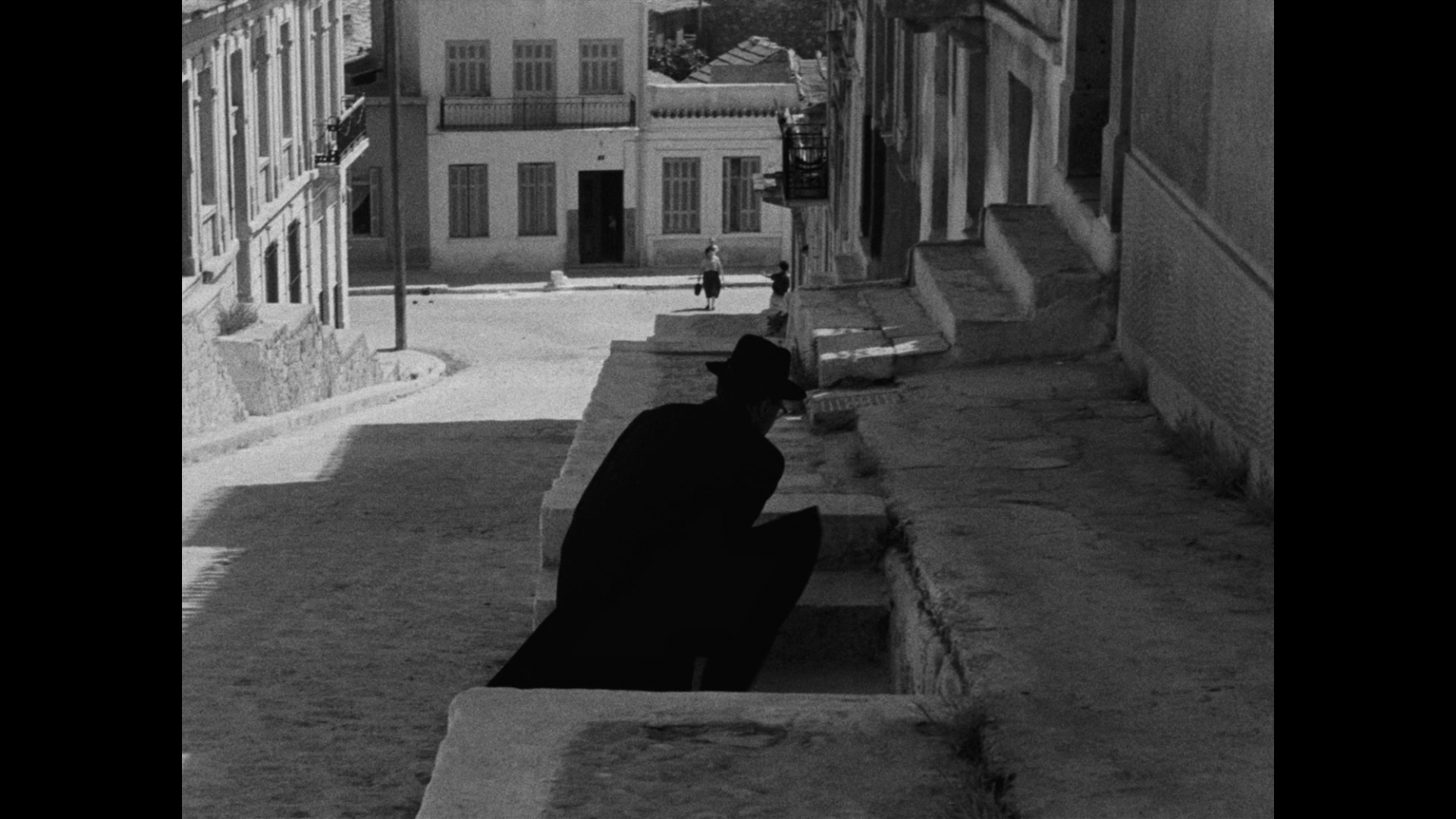
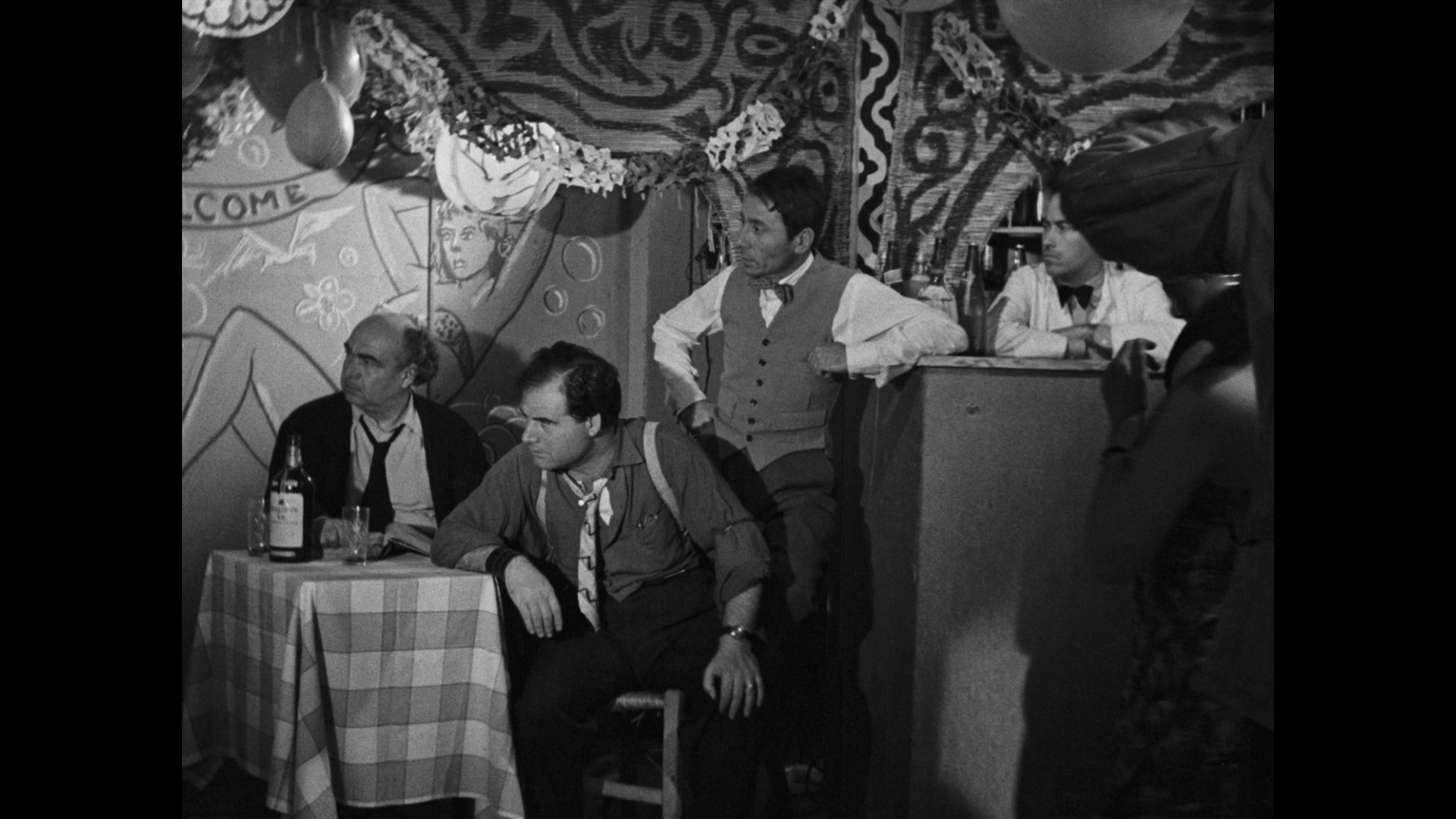
The overall plot is largely simple – Thomas looks very similar to O Drakos (The Dragon, The Fiend, The Ogre – however one chooses to translate from Greek), a wanted man whose crimes are never made explicitly apparent but who has transformed Greece regardless; and this infamy is comedically set against what the audience knows about Thomas up to this point, and how he operates after being “outed” as O Drakos to the rest of his community. After being pursued on New Year’s Eve throughout his day by mobs, he eventually retires to a cabaret wherein he meets the owner/criminal enterprise leader Hondros (Giannis Argyris), and in another mixup, believes O Drakos can help his crew with a heist to grab an ancient Greek pillar and sell it to the Americans.
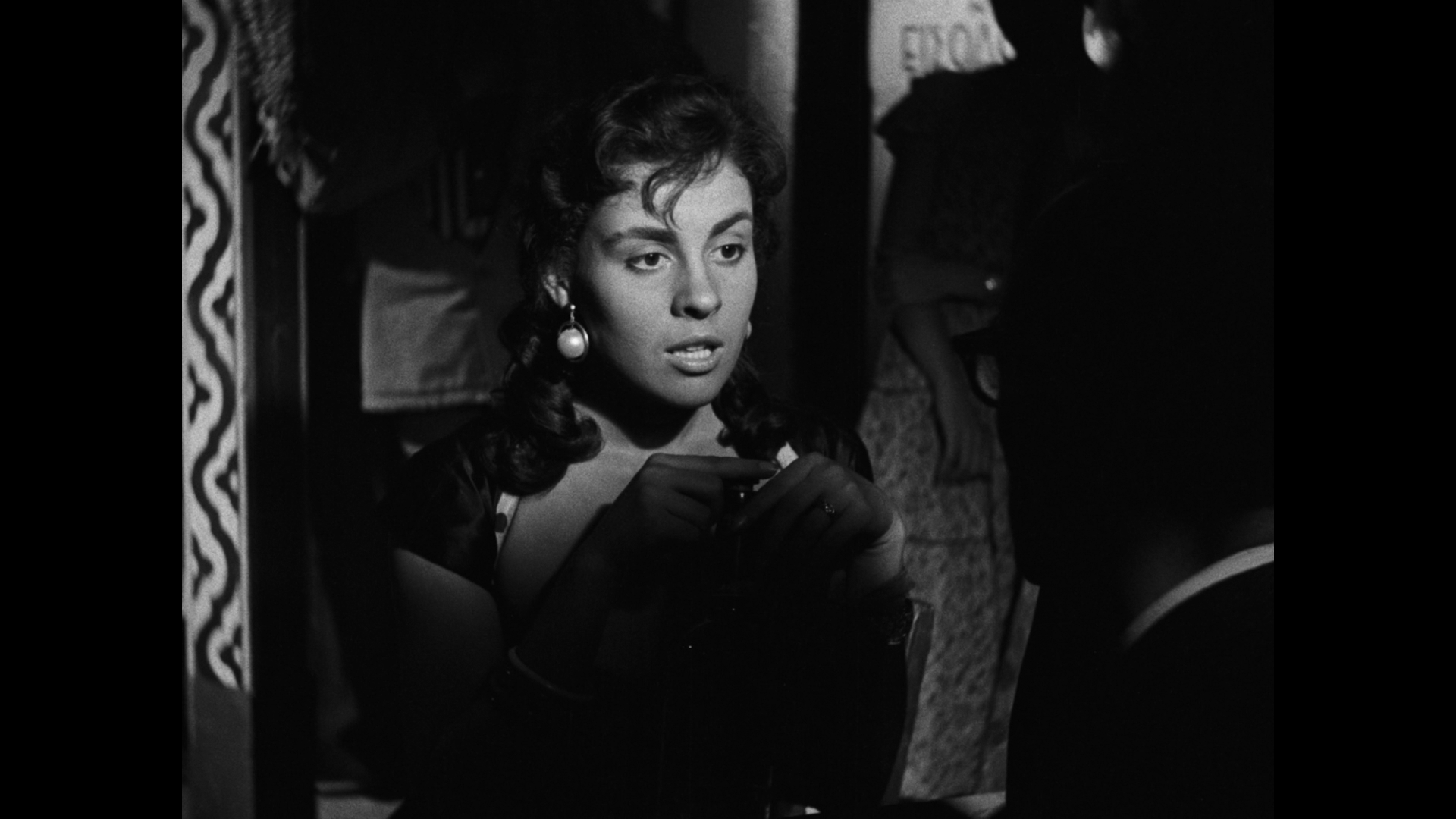
But all of this takes nearly 90 minutes to present to the audience; Koundouros’ direction is stunningly stoic, often pondering the cabaret set design and the traditional dance sequences instead of dealing with the overall plot. And in a way, this is purely intentional, since a large majority of the film operates under an assumption that the audience, too, does not know if Thomas truly is O Drakos disguising himself as the enemy (a banker). It takes until the finale, when Thomas is arrested leading to a reveal that he does not have O Drakos’ known tattoo, for the audience to feel comfortable believing it’s a real case of mistaken identity. This distrust translates directly to the film’s themes of identity – or the erroneous assumptions about them. In The Ogre of Athens, every character is judged externally despite their own internal feelings toward their own identity. Roula (Margarita Papageorgiou), a young dancer in the cabaret, is given the nickname Baby by her boss since he’s raised her, and this infantilization is a direct contrast to how she feels about growing up and leaving this past behind. Similarly, Thomas himself – who, at the start of the film, has no real aspirations for New Year’s Eve and even lives austerely by refusing to buy a new coat for himself – ultimately finds himself somewhat drawn into the fame and power that the name O Drakos conjures.
These elements are certainly prevalent without historical context of post-Civil War Greece, but they don’t have as much pathos without that knowledge. And perhaps that’s a sticking point with The Ogre of Athens – Koundouros is so hesitant to explicitly address that parallel on the population’s anxieties about their fellow neighbors after the War that the overall movie can feel strangely devoid of its catharsis without that context. The film is peppered with references to American encroachment and economic turmoil, but it often falls short of presenting a movie that’s actually entertaining to watch. That might explain its tepid response post-release and its resurgence after historians outlined its impact in a post-Civil War world.
The Ogre of Athens is undoubtedly an important movie for Greek culture and its statements on rebuilding from a war that pitted neighbors and families against each other are resonant with context. But the act of watching the movie sometimes leaves something to be desired, with the multiple extended dance sequences, the turgid pacing, and the straightforward plot pushing the viewer away from getting drawn into the philosophical ideas at its heart. Much like the characters of the movie, The Ogre of Athens is more complicated than it seems on the surface – both in terms of its importance, and its enjoyment value.
Blu-ray
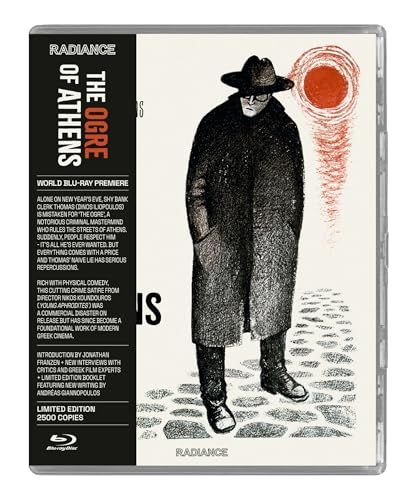
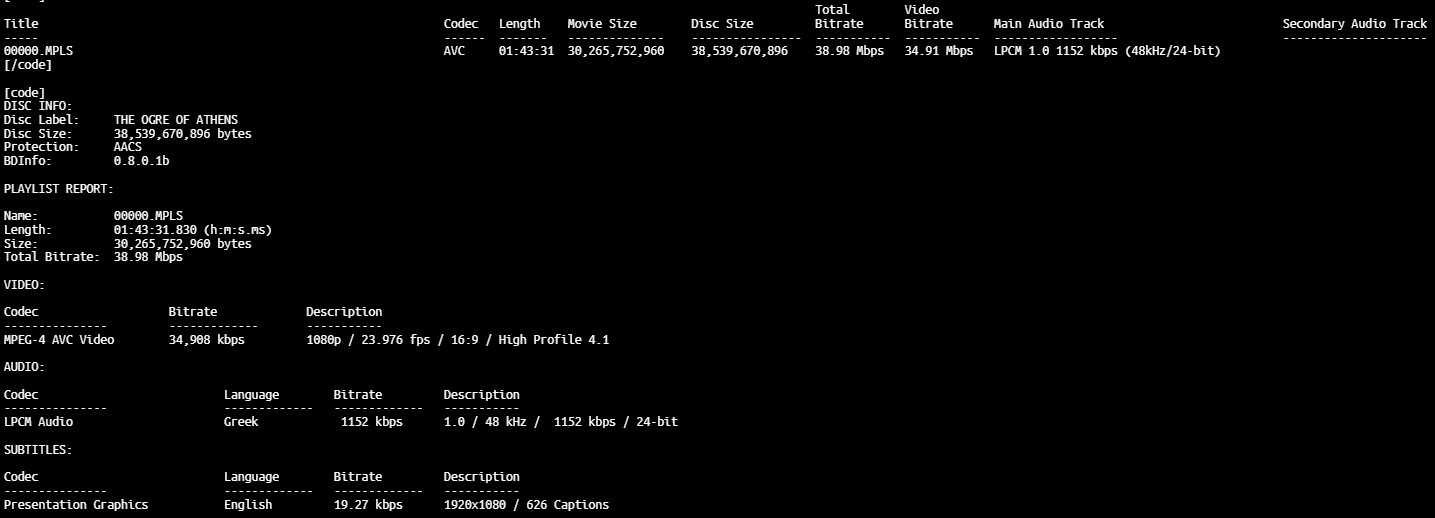
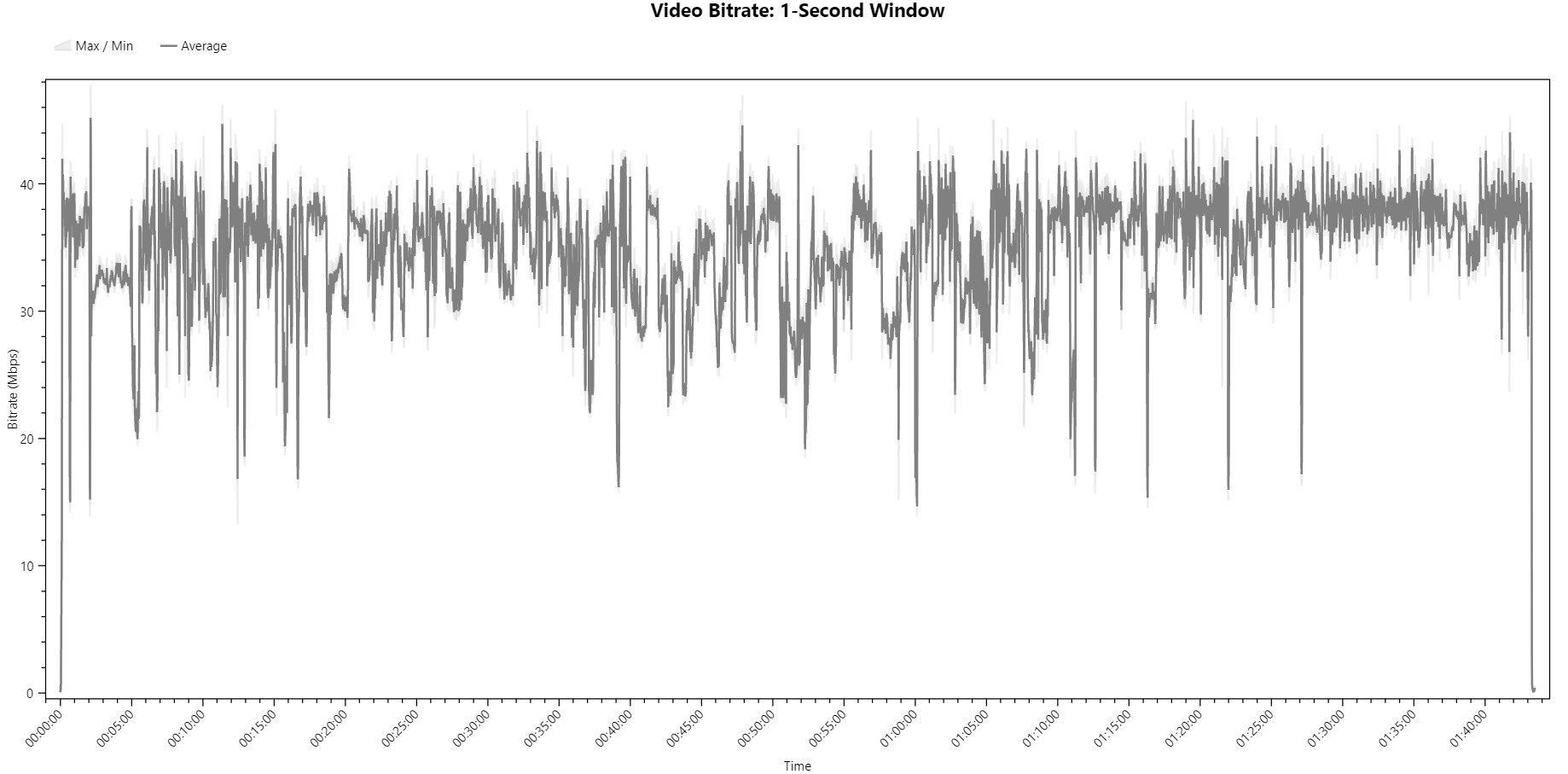
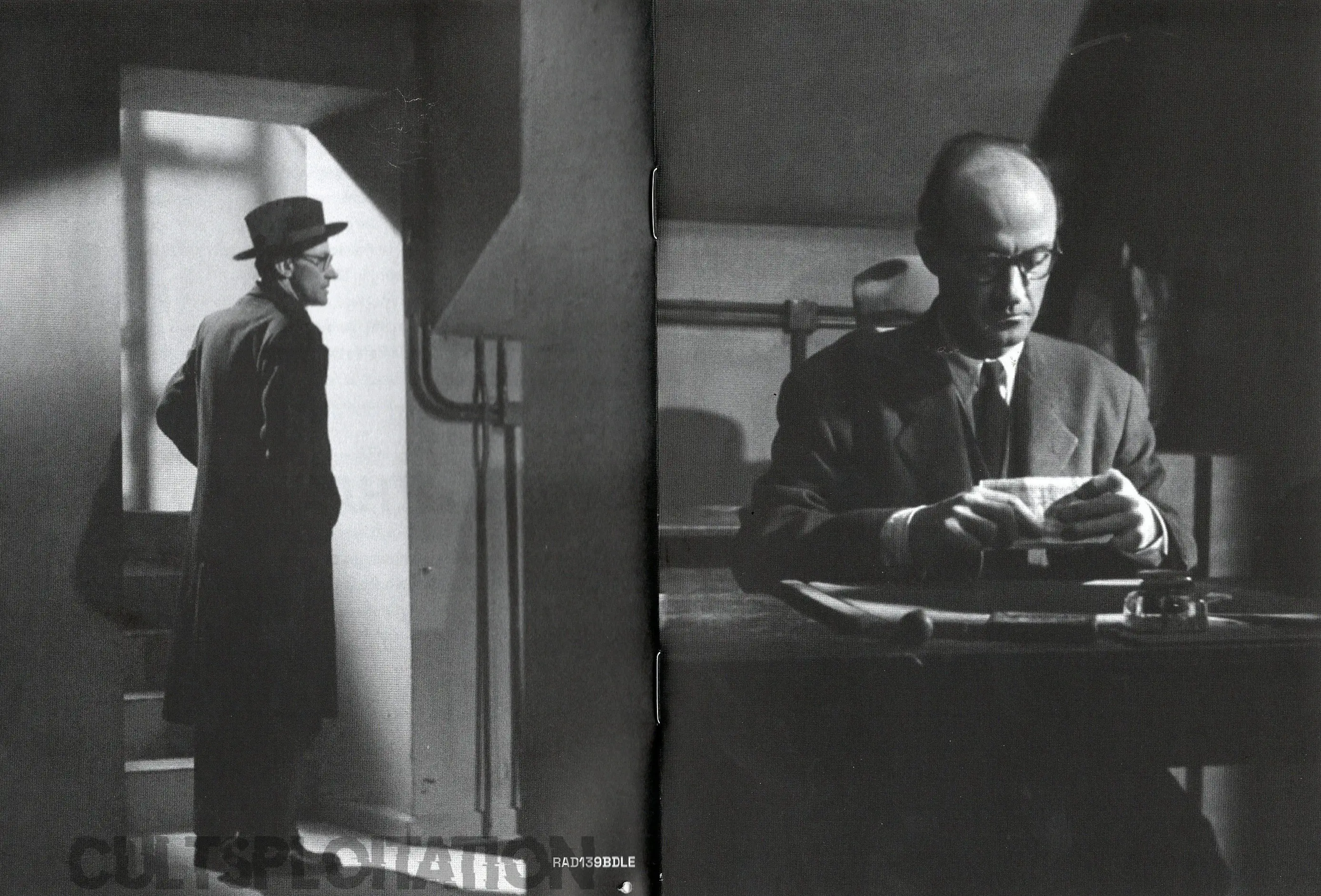
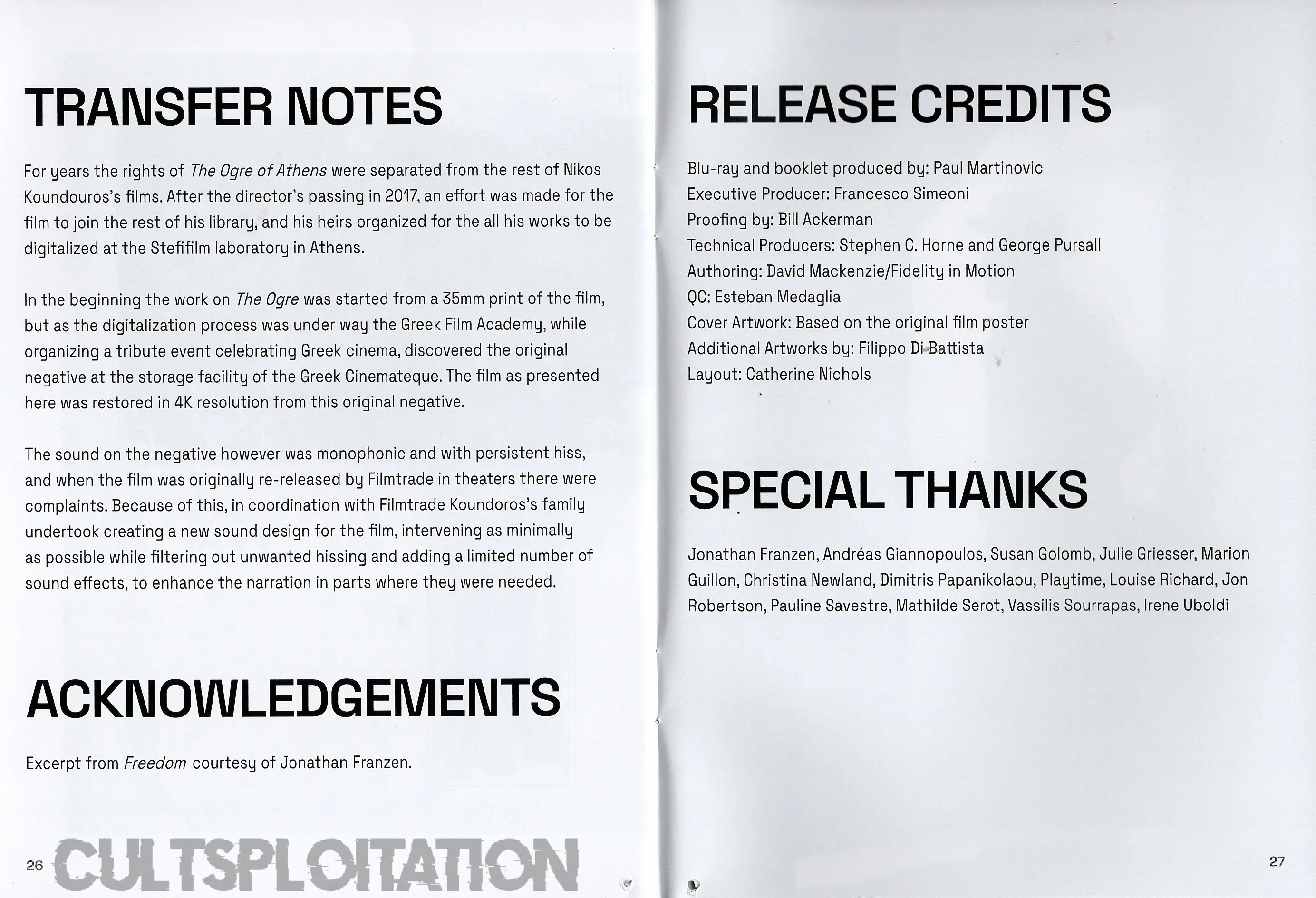
Radiance Films has released The Ogre of Athens on Blu-ray featuring a 4K transfer of the film from the original 35mm negative; the liner notes mention that the negative was recently discovered and digitized by the Greek Film Academy to join the rest of Koundouros’ filmography. The film is presented in its original 1.37:1 aspect ratio and overall looks quite good despite the obvious age and wear on the negative. Film grain is organic and in many close-up sequences reveals a large amount of texture, particularly in facial features. Also of note is the visibility of background details, which are often American film posters or ancient Greek imagery, that are important to the film’s subtext. However, there’s clearly a lot of age-related damage that could not be repaired here, including recurring lines and some occasional over-exposed lighting. These are relatively minor, though, and don’t detract from the overall product while preventing a pristine experience.
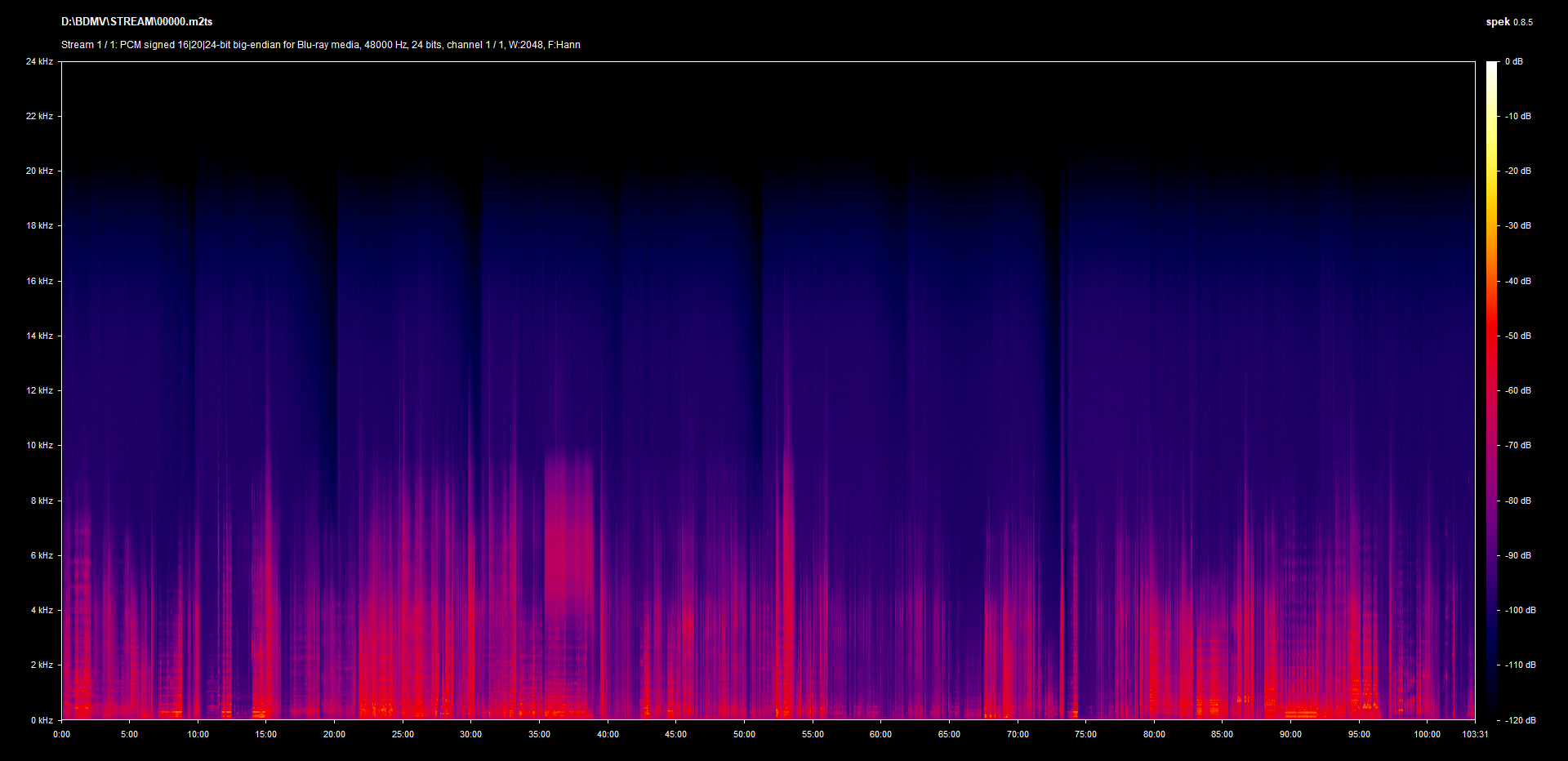
For audio, the liner notes remark that the original sound negative was in particularly bad shape and Koundouros’ family opted to create a new sound design for its restoration. For the most part, this is unnoticeable during viewing with the LPCM 1.0 mono Greek soundtrack maintaining good voluminous dialogue albeit with a slightly audible hiss throughout. There are a couple of sequences late in the film that feature a particularly noticeable echo that may stem from the restoration; viewers may also observe that most sound effects are absent. Still, all around this sounds quite good especially considering the problematic film elements. This release also features a newly translated set of subtitles, defaulted on; since this reviewer has not seen the film with prior translations, I can’t remark on its effectiveness – however from the booklet essays where some direct dialogue is referenced, it does seem like some translations change the context quite significantly.
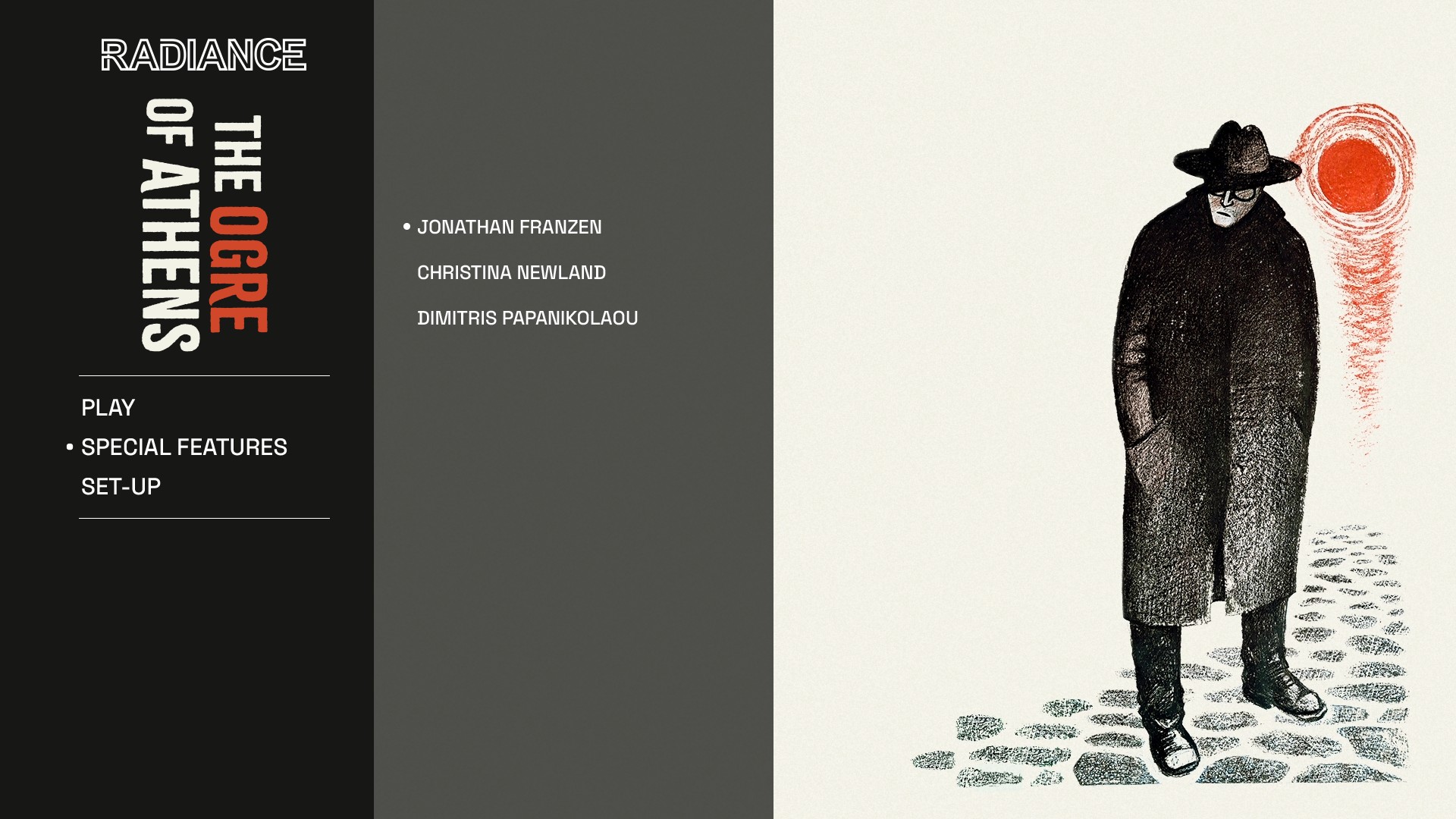
For extras, Radiance has assembled a good offering of new options here. The first is a new introduction by author Jonathan Franzen that can be viewed prior to starting the movie; in it, he discusses his initial viewing of the film and his inspiration to use it as a reference in his novel Freedom. A new interview with critic Christina Newland explores the political activist background behind Koundouros’ filmmaking and the particular historical context when The Ogre of Athens was released. Film critic Dimitris Papanikolaou gives a new interview that also dives into the historical context, much more situated around a Greek perspective; it’s a compelling 26-minute viewing but may have arguably been even better as an audio commentary that could comment on the references in situ.
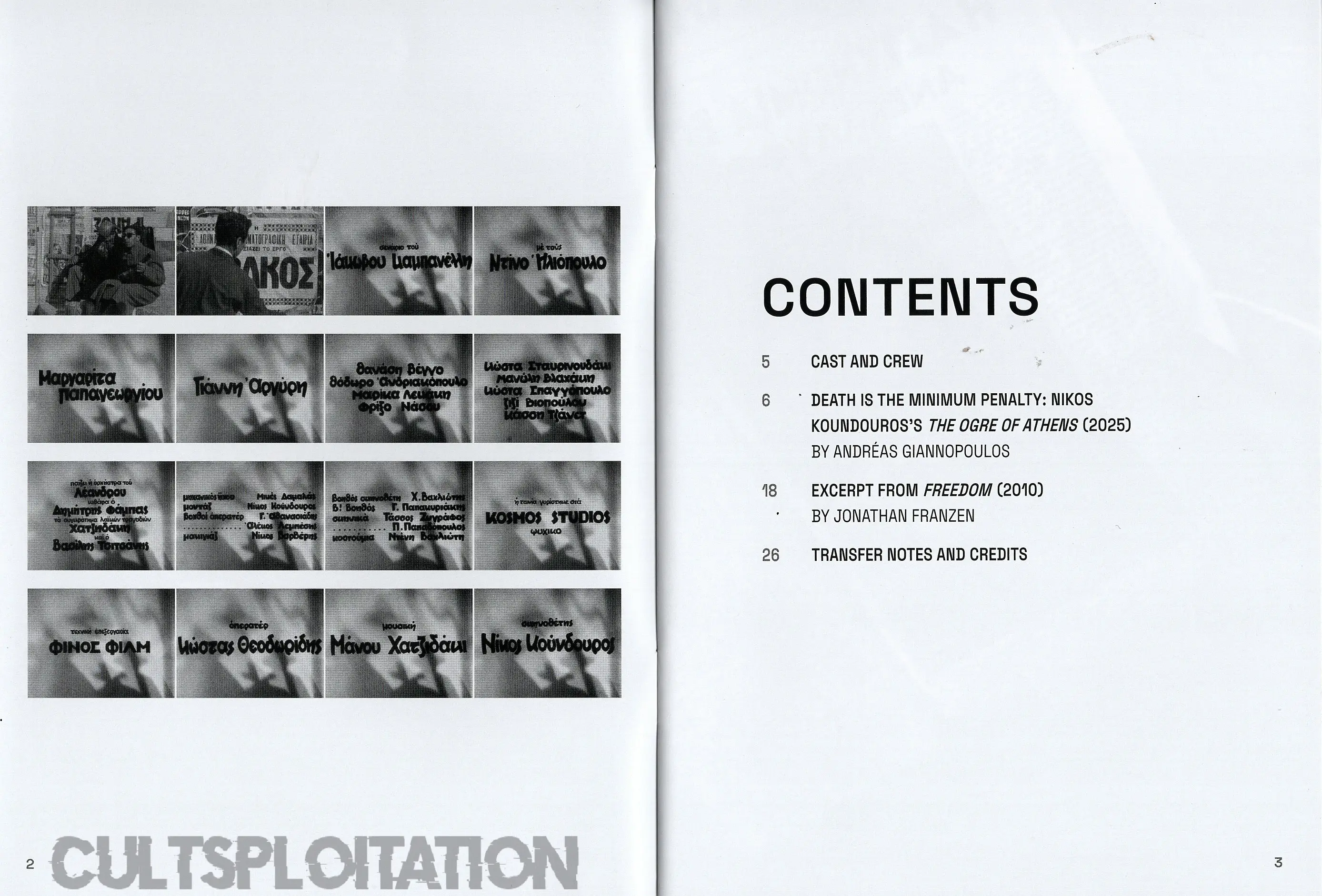
This release also provides an essay booklet featuring new writing by Andreas Giannopoulos that follows Koundouros through his early life as a prisoner, his first film works, and then an exploration of the thematic resonance in The Ogre of Athens. An excerpt from Franzen’s Freedom is also included that references the situation he details in his introduction interview.
Extra Features
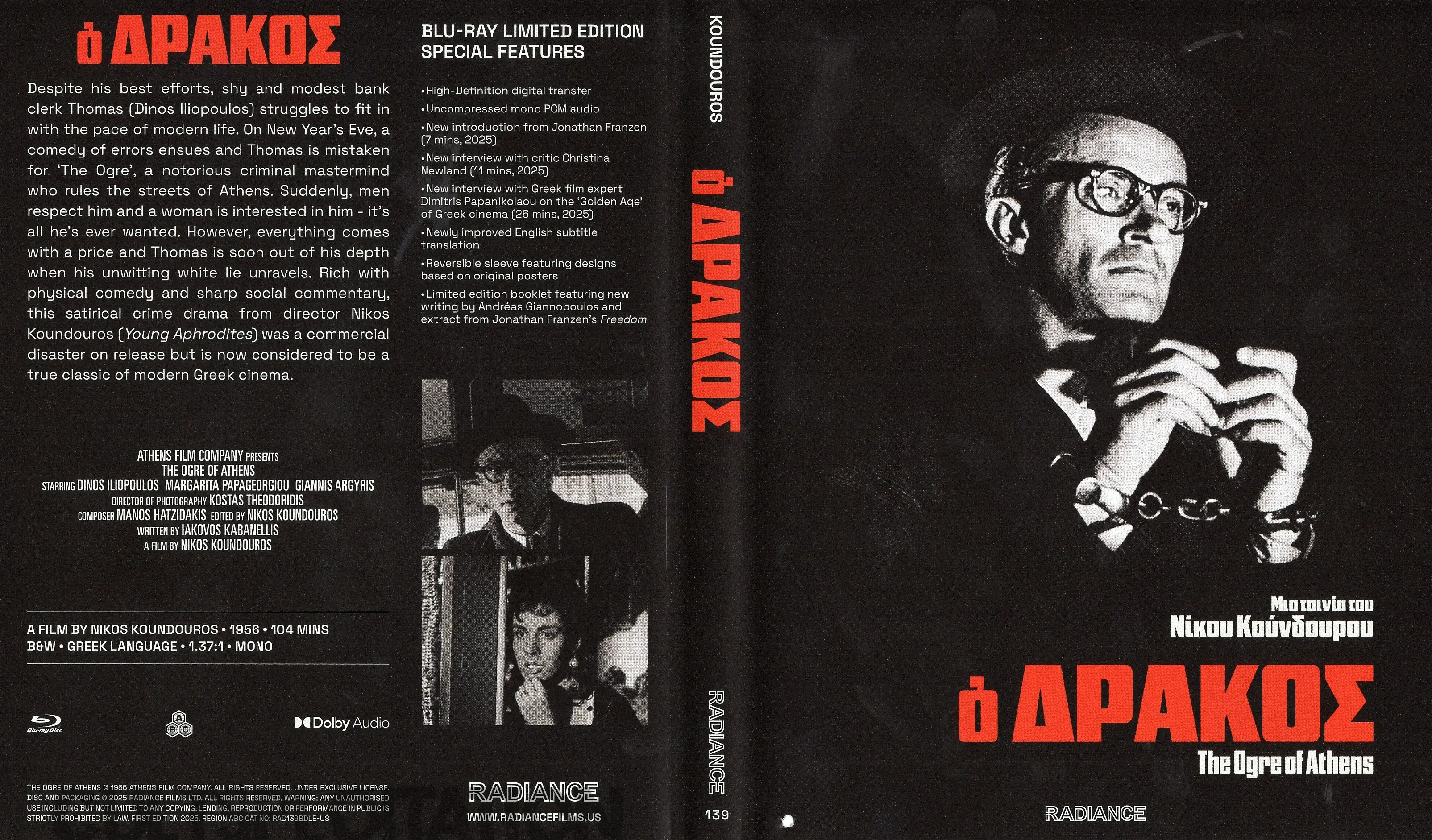
- High-Definition digital transfer
- Uncompressed mono PCM audio
- NEW introduction from Jonathan Franzen (1080p; 7:18)
- NEW interview with critic Christina Newland (1080p; 11:05)
- NEW interview with Greek film expert Dimitris Papanikolaou (1080p; 25:46)
- NEW improved English subtitle translation
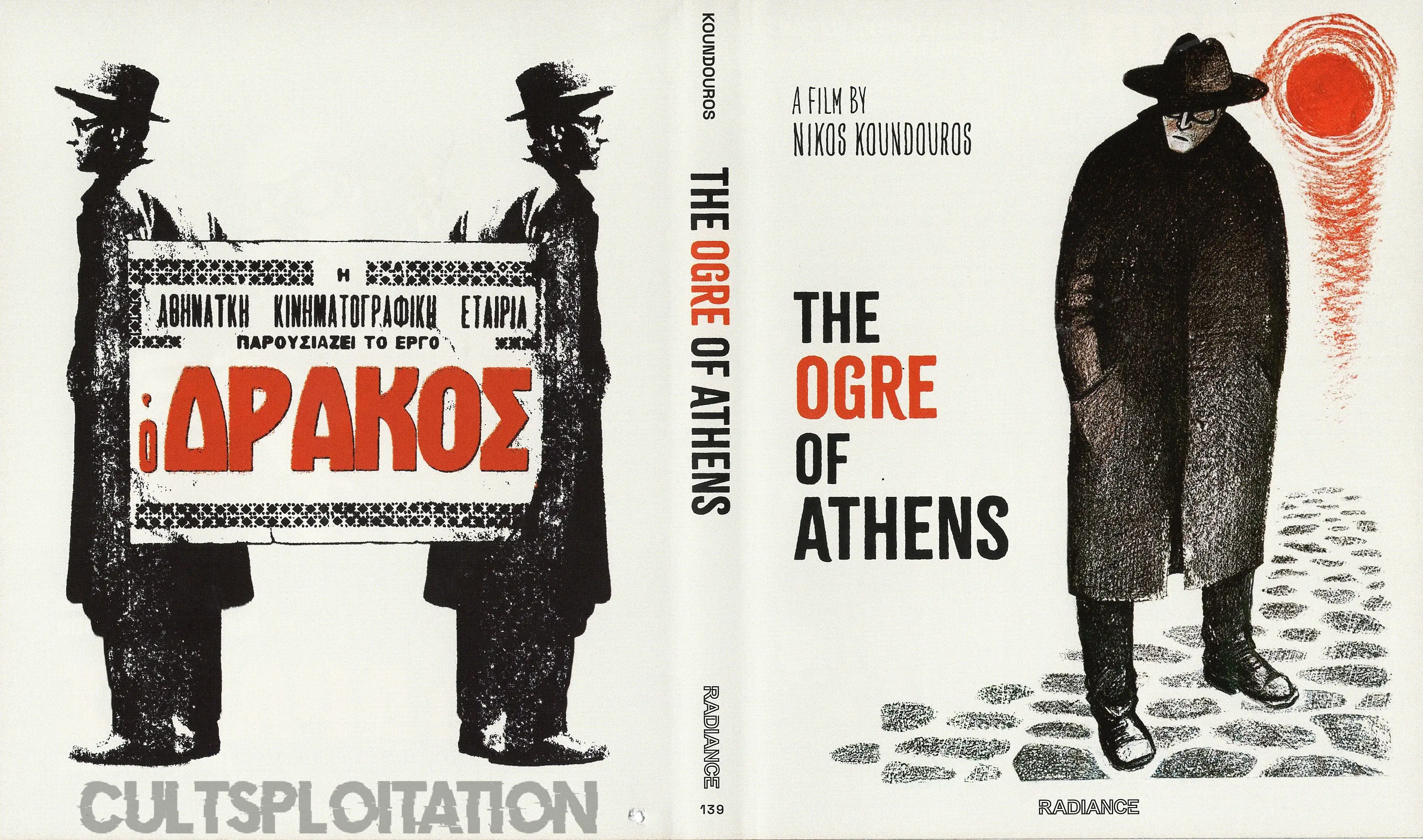
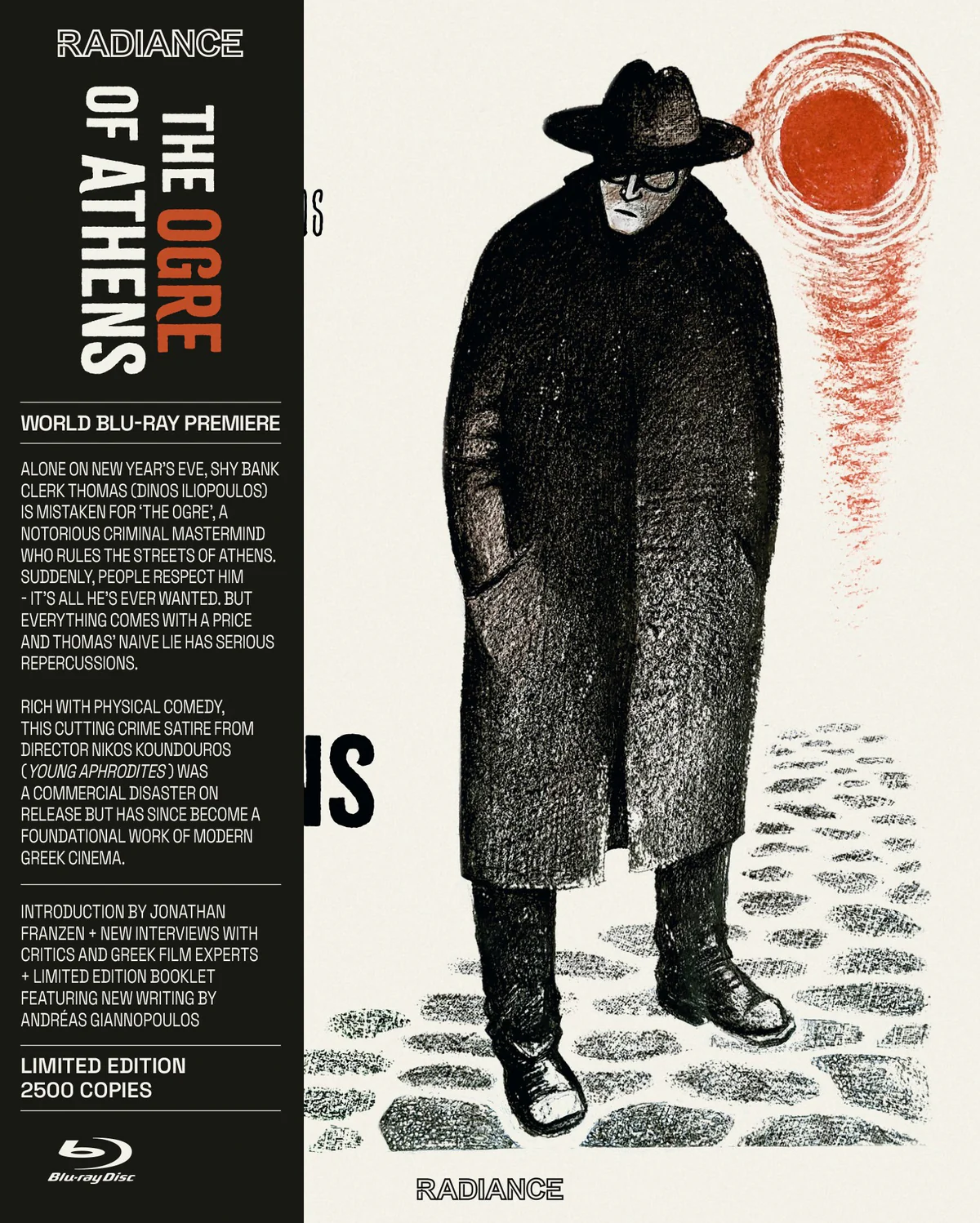
- NEW Reversible sleeve featuring designs based on original posters
- NEW Limited edition booklet featuring new writing by Andréas Giannopoulos and extract from Jonathan Franzen’s Freedom
- Limited edition of 2500 copies, presented in full-height Scanavo packaging with removable OBI strip leaving packaging free of certificates and markings
Verdict
For particular cinephiles, The Ogre of Athens will be an educational viewing experience and one that showcases the particular power of Koundouros’ political art; for the average viewer, though, it may be a difficult film to parse. With that said, this release from Radiance Films provides the best available transfer and a large number of extras that help contextualize and criticize this elusive work.